Polycystic Ovary Syndrome (PCOS) has become one of the most common hormonal disorders affecting Indian women today. Changes in lifestyle, increased consumption of processed foods, sedentary routines, stress, and poor sleep have contributed to a steady rise in PCOS cases across urban as well as rural India. While medicines play an important role in treatment, scientific research consistently shows that diet and lifestyle modifications are the foundation of successful PCOS management.
If you have recently been diagnosed with PCOS or are experiencing irregular periods, weight gain, acne, excessive facial hair, or difficulty conceiving, understanding the best diet for PCOS in Indian women can help you manage symptoms naturally and improve your long-term health.
This patient-friendly guide explains what PCOS is, why diet matters, the best foods to include, foods to avoid, and practical meal ideas designed for Indian women.
What is PCOS and Why Does Diet Matter?
PCOS (Polycystic Ovary Syndrome) is a hormonal and metabolic condition in which the ovaries produce higher-than-normal levels of androgens (male hormones). This hormonal imbalance affects ovulation, menstrual cycles, fertility, metabolism, and overall health.
One of the most important factors associated with PCOS is insulin resistance. Insulin is the hormone responsible for helping glucose enter the body’s cells for energy. When the body becomes resistant to insulin, the pancreas produces more insulin to compensate. High insulin levels stimulate the ovaries to produce more androgens, which can worsen PCOS symptoms.
This is why diet plays such a crucial role. Choosing foods that help stabilize blood sugar levels can improve insulin sensitivity, support hormonal balance, regulate menstrual cycles, and reduce the risk of long-term complications such as type 2 diabetes and cardiovascular disease.
Common Symptoms of PCOS in Indian Women
Although symptoms vary from woman to woman, the most common signs include:
- Irregular or missed menstrual periods
- Difficulty in conceiving
- Weight gain, especially around the waist
- Persistent acne
- Excess facial or body hair (hirsutism)
- Hair thinning or excessive hair fall
- Dark patches on the neck, underarms, or groin (acanthosis nigricans)
- Fatigue
- Mood swings
Early diagnosis and lifestyle changes can significantly improve these symptoms.
Best Diet for PCOS in Indian Women
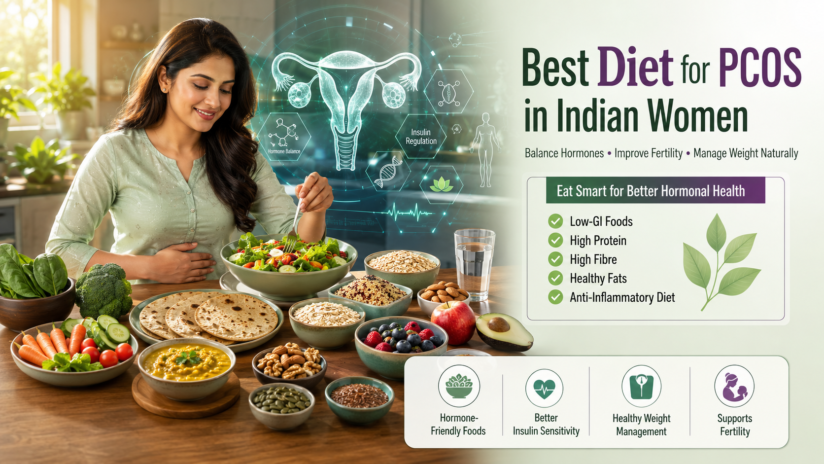
There is no single “PCOS diet,” but doctors and nutrition experts recommend a balanced eating pattern that improves insulin sensitivity, reduces inflammation, and supports healthy weight management.
Choose Low Glycaemic Index (GI) Foods
Low-GI foods release sugar slowly into the bloodstream, preventing sudden spikes in blood glucose and insulin.
Healthy choices include:
Brown rice | Oats | Barley | Millets (Ragi, Bajra, Jowar) | Whole wheat chapati | Quinoa | Sweet potatoes
Replacing refined carbohydrates with whole grains is one of the most effective dietary changes for women with PCOS.
Increase Protein Intake
Protein helps regulate appetite, supports muscle health, and keeps blood sugar levels stable.
Good protein sources include:
Eggs | Paneer | Tofu | Greek yogurt | Lentils | Chickpeas | Rajma | Soy products | Fish | Skinless chicken
Including protein with every meal can reduce unhealthy cravings and improve satiety.
Eat More Fibre-Rich Foods
Fibre supports digestion, improves gut health, and slows the absorption of glucose.
Include plenty of:
Spinach | Fenugreek leaves | Broccoli | Cauliflower | Carrots | Cucumber | Tomatoes | Apples | Pears | Guava | Oranges | Flaxseeds | Chia seeds
Half of your lunch and dinner plate should ideally consist of vegetables.
Include Healthy Fats
Healthy fats are essential for hormone production and reducing inflammation.
Choose:
Almonds | Walnuts | Pistachios | Pumpkin seeds | Sunflower seeds | Flaxseeds | Olive oil | Mustard oil | Groundnut oil (used in moderation)
Avoid trans fats and repeatedly heated cooking oils.
Foods to Avoid with PCOS
Certain foods may increase insulin resistance, inflammation, and weight gain.
Limit:
Sugary soft drinks | Sweetened fruit juices | White bread | Refined flour (maida) | Cakes and pastries | Cookies and biscuits | Deep-fried snacks | Potato chips | Instant noodles | Fast food such as burgers and pizzas | Processed meats | Sugary breakfast cereals | Excess sweets and desserts
Occasional treats are acceptable, but they should not become part of your daily eating routine.
Sample Indian PCOS Diet Plan
Healthy Breakfast Options
Start your day with balanced nutrition.
Choose from:
- Moong dal chilla with mint chutney
- Vegetable oats with boiled eggs
- Ragi dosa with sambar
- Vegetable poha with sprouts
- Greek yogurt topped with nuts and seeds
Avoid sugary cereals and fried breakfast foods.
Mid-Morning Snack
Healthy options include:
- One seasonal fruit
- Roasted chana
- Mixed nuts
- Coconut water (without added sugar)
Balanced Lunch
A healthy lunch should include:
Two whole wheat rotis or brown rice | Dal or grilled chicken/fish | Mixed vegetables | Fresh salad | Curd | Avoid oversized portions of rice or fried foods.
Evening Snack
Instead of samosas or chips, choose:
Sprouts chaat | Roasted makhana | Green tea without sugar | Buttermilk | Fruit with nuts
Healthy Dinner
Keep dinner light and nutritious.
Options include:
Millet khichdi with vegetables | Vegetable soup with paneer | Grilled fish with sautéed vegetables
Mixed dal with salad | Tofu stir-fry | Avoid eating heavy meals late at night.
Can Weight Loss Improve PCOS?
Yes. Studies show that losing just 5–10% of body weight can significantly improve insulin sensitivity, regulate menstrual cycles, restore ovulation, and improve fertility in overweight women with PCOS.
However, rapid weight-loss diets or skipping meals are not recommended. Sustainable lifestyle changes produce better long-term results.
Lifestyle Habits That Support a Healthy PCOS Diet
Diet works best when combined with healthy daily habits.
Exercise Regularly
Aim for at least 150 minutes of moderate-intensity exercise each week.
Activities may include:
Brisk walking | Cycling | Swimming | Yoga | Strength training | Dancing
Regular exercise improves insulin sensitivity and supports healthy weight management.
Prioritize Good Sleep
Sleep is essential for hormonal health.
Aim for 7–9 hours of quality sleep every night and maintain a consistent sleep schedule.
Manage Stress
Stress can affect hormone levels and worsen PCOS symptoms.
Helpful stress-management techniques include:
Meditation | Deep breathing exercises | Yoga | Reading | Spending time outdoors | Mindfulness practices
Stay Well Hydrated
Drink sufficient water throughout the day and replace sugary beverages with healthier alternatives such as plain water, lemon water, or unsweetened buttermilk.
Common Diet Mistakes Women with PCOS Should Avoid
Many women unintentionally make dietary mistakes that can worsen symptoms.
Common mistakes include:
- Skipping breakfast
- Following crash diets
- Eating excessive refined carbohydrates
- Drinking sugary beverages daily
- Consuming inadequate protein
- Eating late-night heavy meals
- Relying on processed “diet” foods
Small, consistent improvements are more effective than extreme dietary restrictions.
When Should You Consult a Gynecologist for PCOS?
Diet alone cannot replace medical evaluation.
Consult a gynecologist if you experience:
- Irregular periods lasting more than three months
- Difficulty becoming pregnant
- Persistent acne
- Excess facial hair
- Unexplained weight gain
- Hair thinning
- Dark skin patches around the neck or underarms
Early diagnosis allows timely treatment and helps reduce the risk of infertility, diabetes, high blood pressure, and other metabolic complications.
Why Choose Dr. Shweta Bansal Wazir for PCOS Management?
PCOS is a lifelong condition that requires individualized care. Every woman has different symptoms, hormonal patterns, fertility goals, and lifestyle challenges.
Dr. Shweta Bansal Wazir, an experienced Obstetrician and Gynecologist, provides comprehensive and evidence-based PCOS management tailored to the needs of Indian women. Her approach focuses on identifying the root cause of hormonal imbalance while combining medical treatment with practical dietary guidance, weight management strategies, menstrual health support, fertility planning, and long-term metabolic care.
Patients receive personalized counselling to help them adopt sustainable lifestyle changes, improve hormonal health, regulate menstrual cycles, and enhance their overall quality of life with confidence.
For expert consultation and personalized PCOS care:
Dr. Shweta Bansal Wazir
Phone: +91 84481 28007
Website: www.drshwetawazir.com
Conclusion
Following the best diet for PCOS in Indian women is one of the most effective ways to improve hormonal balance, manage weight, regulate menstrual cycles, and support fertility. A diet rich in whole grains, fresh vegetables, lean proteins, healthy fats, and fibre, combined with regular physical activity, adequate sleep, and stress management can make a meaningful difference in managing PCOS symptoms.
Remember, PCOS is manageable with the right guidance and consistent lifestyle changes. Seeking timely medical advice and making healthier food choices today can help protect your reproductive health and overall well-being for years to come.



Leave A Comment