
Best Gynecologist Clinic in Gurgaon


April 9, 2026
Understanding Puberty: A Natural Developmental Milestone
Puberty represents one of the most significant transitions in a young girl’s life, a journey from childhood toward adolescence that encompasses profound physical, emotional, and psychological changes. This natural developmental stage typically begins between 9 and 14 years of age, triggered by hormonal signals from the brain’s pituitary gland .
The hormones estrogen and progesterone initiate a cascade of transformations: breast development, the appearance of underarm and pubic hair, rapid height growth, and eventually, the onset of menstruation. Research from Shanghai Children’s Medical Center indicates that approximately 2-3 years pass between breast development (Tanner Stage 2) and the first menstrual period, known as menarche .
For mothers and daughters alike, understanding that every girl develops at her own unique pace is essential. Variations in growth patterns, body shape, and timing of changes are entirely normal. According to the Indian Journal of Health, Sexuality and Culture, awareness of these natural variations helps reduce anxiety and promotes healthy self-esteem during this transitional period .
The Menstrual Cycle: What Every Girl Should Know
What Is a Period?
Menstruation is the natural process in which the uterine lining sheds and exits the body through the vagina. This occurs approximately once a month as part of the menstrual cycle when pregnancy does not occur. The menstrual flow typically lasts between 3 to 7 days, with the average cycle length for adolescents ranging from 21 to 45 days during the first few years .
Understanding Cycle Regularity
One of the most common concerns among young girls and their mothers is cycle regularity. The science is reassuring: during the first year after menarche, ovulation occurs in only about 2 in 10 cycles. By the sixth year, this increases to approximately 9 in 10 cycles . This explains why irregular periods are not a cause for alarm in the early years.
According to clinical guidelines from Shanghai Children’s Medical Center, the normal pattern for adolescents follows this timeline:
- First year after menarche: No strict normal range; irregularity is expected
- 1-3 years after menarche: Cycles typically range from 21-45 days
- 3+ years after menarche: Cycles generally settle into a 21-35 day range
Warning Signs: When to Consult a Gynecologist
While variations in menstrual cycles are normal, certain symptoms warrant professional medical evaluation. The National Family Health Survey data indicates that awareness of these warning signs is crucial for early intervention and prevention of reproductive health issues .
Red Flags Requiring Medical Attention:
- Absence of menstruation: No period by age 15, or no menstruation within three years of breast development
- Cycle irregularities: Periods occurring less than 21 days apart or more than 45 days apart after the first year
- Heavy bleeding: Soaking through a pad every 1-2 hours, passing large clots larger than a one-rupee coin, or bleeding lasting more than 10 days
- Severe pain: Cramps that interfere with daily activities or are not relieved by over-the-counter medication
- Sudden changes: Periods that stop for 90 days or more after having regular cycles
Dr. Sapna Chauhan, Consultant Gynecologist at Kokilaben Hospital, emphasizes that early consultation helps identify underlying conditions such as polycystic ovary syndrome (PCOS) or thyroid disorders before they affect long-term health .
PCOS: Understanding a Growing Concern Among Indian Adolescents
Polycystic Ovary Syndrome has emerged as one of the most common endocrine disorders affecting young women in India. According to a comparative study conducted in Maharashtra, the prevalence of PCOS among urban college girls is 10.6%, compared to 6.7% in rural areas . More broadly, experts report that approximately 1 in 5 women in India is affected by PCOS to some degree .
Common Symptoms of PCOS:
- Menstrual irregularities: Periods occurring fewer than 8-9 times per year
- Hyperandrogenism: Excess facial or body hair, severe acne, male-pattern hair thinning
- Metabolic changes: Unexplained weight gain, difficulty losing weight, darkening of skin in body folds (acanthosis nigricans)
- Ovulatory dysfunction: Difficulty conceiving due to irregular ovulation
Risk Factors and Causes
The increasing prevalence of PCOS in India is closely linked to lifestyle changes. According to experts at Kokilaben Hospital, key contributing factors include:
- Sedentary lifestyle with prolonged sitting
- High consumption of processed and junk foods
- Irregular sleep patterns
- Chronic stress from academic and career pressures
- Genetic predisposition, family history significantly increases risk
Management and Lifestyle Interventions
While PCOS has no permanent cure, it is highly manageable through sustained lifestyle modifications:
Weight Management: Even a 5-10% reduction in body weight can restore regular ovulation and improve symptoms. Among urban college girls in the Pune study, obesity prevalence was significantly higher at 59.7%, highlighting the importance of weight management strategies .
Dietary Modifications: Focus on whole grains, green leafy vegetables, lean proteins, and foods rich in fiber. Limit sugar, refined flour (maida), and highly processed foods .
Regular Exercise: At least 30-40 minutes daily of brisk walking, jogging, cycling, or strength training improves insulin sensitivity and hormonal balance .
Stress Reduction: Yoga, pranayama (breathing exercises), and adequate sleep (7-8 hours) help regulate cortisol levels that can exacerbate hormonal imbalances.
Menstrual Hygiene: Essential Practices for Health and Dignity
Progress in Menstrual Hygiene in India
The National Family Health Survey (NFHS-5) reveals encouraging progress in menstrual hygiene practices among Indian women aged 15-24. The use of hygienic methods during menstruation increased from 57.58% in NFHS-4 to 77.33% in NFHS-5, a remarkable 20 percentage point improvement over five years .
According to research from the International Institute for Population Sciences, key factors driving this improvement include increased media exposure, higher educational attainment, and targeted government initiatives such as the Menstrual Health Scheme under the National Health Mission .
Proper Menstrual Hygiene Practices:
- Change sanitary pads every 4-6 hours to prevent bacterial growth and infections
- Wash hands thoroughly before and after changing menstrual products
- Bathe daily during menstruation this does not harm health and is essential for hygiene
- Dispose of pads responsibly: Wrap in paper and place in a dustbin; never flush them down the toilet
- Wear clean cotton underwear to allow proper ventilation
- Wipe from front to back after using the toilet to prevent bacterial transfer
Vulval Hygiene: Important Considerations
- Clean only the external area with water
- Avoid soap inside the vagina the vagina is self-cleaning
- Avoid scented products, harsh soaps, and douching
- Change underwear daily
Nutrition: Building a Foundation for Menstrual Health
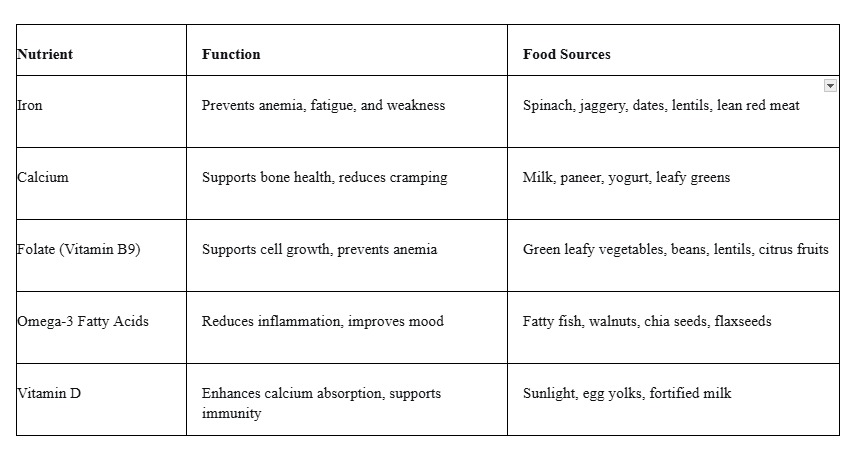
Proper nutrition plays a vital role in supporting hormonal balance, managing menstrual symptoms, and preventing deficiencies. According to Kokilaben Hospital’s Department of Nutrition Therapy, approximately 50% of Indian women are anemic, primarily due to iron deficiency from menstrual blood loss .
Essential Nutrients for Menstrual Health:
Hydration and Overall Wellness
Adequate hydration supports digestion, reduces bloating, and helps manage menstrual discomfort. Along with 8-9 hours of quality sleep, proper hydration contributes to emotional balance and reduced irritability during the menstrual cycle.
Physical Activity: A Natural Ally During Menstruation
Contrary to traditional myths, physical activity during menstruation is not only safe but beneficial. Regular exercise:
- Improves mood by releasing endorphins
- Reduces cramp intensity through improved blood circulation
- Strengthens bones and maintains healthy weight
- Reduces stress and anxiety
Light activities such as walking, stretching, swimming, or yoga are particularly effective during menstruation. Research from Shanghai Children’s Medical Center confirms that exercise helps reduce prostaglandin levels that cause uterine cramping .
Emotional Well-being and Body Positivity
Puberty brings not only physical changes but also emotional and social transformations. Young girls may experience:
- Mood swings and heightened sensitivity
- Fluctuating self-confidence
- Evolving friendships and social dynamics
- Desire for independence
When to Seek Emotional Support:
Parents and guardians should be attentive to signs that a girl may need additional support:
- Persistent sadness lasting more than two weeks
- Anxiety that interferes with daily activities
- Excessive worry about body image
- Difficulty concentrating at school
- Withdrawal from previously enjoyed activities
Key message: Every body develops at its own pace. Open communication with trusted adults whether mothers, teachers, or healthcare providers, is essential for navigating these changes with confidence.
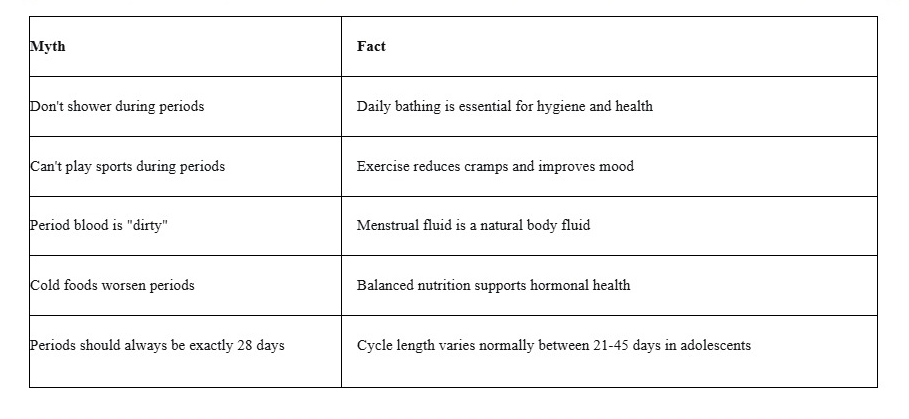
Breaking Myths: Facts About Menstruation
First Gynecologist Visit: What to Expect
According to KIMSHEALTH recommendations, the first gynecological visit should occur between ages 13-15, or when menstruation begins. This visit is primarily educational and typically does not involve an internal pelvic examination .
What Happens During the First Visit:
- Discussion of menstrual cycle patterns and concerns
- Education about normal physical changes during puberty
- Guidance on hygiene and self-care
- Opportunity to ask questions in a safe, confidential environment
Recommended Screening Schedule:
- Pap smear: First screening at age 21, then every 3-5 years if results are normal
- Regular check-ups: Annually for women over 21; adolescents should visit at least once during their teenage years
Periods at School: Practical Guidance
Despite preparation, periods can arrive unexpectedly at school. Here’s how to handle the situation:
- Stay calm this is a normal process that happens to every girl
- Inform a teacher or school nurse discreetly
- Most schools maintain emergency pad supplies (as recommended by CBSE Menstrual Hygiene Guidelines)
- Tie a sweater or jacket around the waist if needed
- Remember: this is a natural part of growing up, and there is no embarrassment in asking for help
Key Takeaways for Every Girl and Mother
- Puberty and menstruation are natural processes embrace them with knowledge and confidence
- Irregular cycles are common during the first 2-3 years; patience is essential
- Proper hygiene prevents infections simple practices make a significant difference
- Healthy lifestyle choices nutrition, exercise, sleep, and stress management—support hormonal balance
- Warning signs should not be ignored seek medical advice when needed
- Open conversations normalize menstruation create a safe space for questions
Final Message
“You are growing beautifully. Respect your body, care for your health, and step into adolescence with confidence.”
Every girl deserves accurate information, compassionate support, and access to quality healthcare. Whether you are a mother guiding your daughter through this transition or a young woman navigating these changes yourself, remember: knowledge is empowering, and asking questions is a sign of strength.
For personalized guidance, consultation, or to address any concerns about menstrual health, PCOS, or adolescent gynecological care, please reach out:
Leave A Comment