
Best Gynecologist Clinic in Gurgaon


April 18, 2026
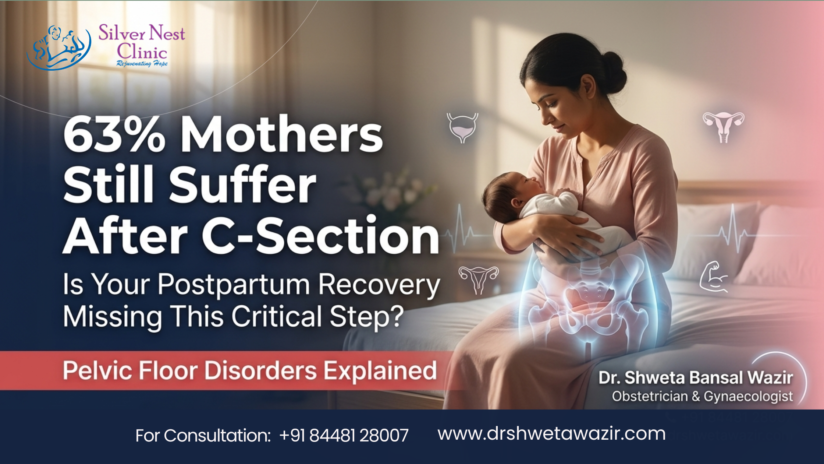
Did you know that 6 out of 10 women who deliver by C‑section in India struggle with hidden bladder or pelvic issues after childbirth?
If you are a new mother who had a cesarean delivery, you might think your pelvic floor is perfectly fine because you did not have a normal vaginal birth. But the truth is different and it is time we talk about it openly.
A 2024 study of 316 Indian mothers found that 63.6% had pelvic floor disorders within six months of delivery. Among them, 54% had bladder problems like leaking urine when coughing or laughing. The most surprising part? Many of these women had delivered by C‑section.
This article is written especially for you an Indian mother, a daughter, a sister, a friend. We will explain in very simple terms:
✔ What pelvic floor disorders are
✔ Why a C‑section does NOT protect you
✔ How to recognise the early warning signs
✔ What you can do right now to heal and prevent future problems
Let us begin.
What Are Pelvic Floor Disorders? (Explained Like Never Before)
Imagine a soft, strong hammock at the bottom of your pelvis. This hammock is made of muscles and tissues. It holds your bladder, your uterus (where your baby grew), and your back passage (rectum) in their proper places. That hammock is your pelvic floor.
When this hammock becomes loose, stretched, or injured, you may experience:
- Urine leakage – a few drops of urine when you sneeze, cough, lift your baby, or run to catch a bus.
- A heavy or dragging feeling down there – as if something is coming out of your vagina.
- Difficulty controlling gas or stool – which can be very embarrassing.
- Pain during sex or loss of pleasure.
These problems are called pelvic floor disorders. They are not dangerous to life, but they can quietly steal your confidence, your comfort, and your joy.
Why This Happens: Pregnancy Itself Is the Main Culprit
Most Indian women believe that only a difficult vaginal delivery causes pelvic floor damage. That is a myth. Here is the reality:
Pregnancy alone puts enormous pressure on your pelvic floor for nine full months.
- Your growing baby weighs 2.5 to 3.5 kilograms, plus the amniotic fluid and the uterus. That is a constant load pressing down.
- Hormones like relaxin soften all your ligaments and connective tissues to prepare for birth. These changes begin in the first trimester itself.
- Even if you have a planned C‑section without going into labour, your pelvic floor muscles have already been stretched and weakened by the weight and hormonal changes of pregnancy.
Think of it like this: carrying a heavy school bag for nine months will tire your shoulders, whether you deliver the bag through a door or a window. The C‑section is just the way your baby came out. It does not undo the work of pregnancy.
The Shocking Data: 63% of Indian Mothers Suffer – Many in Silence
Let us look at what research from trusted medical sources says.
A 2024 observational study conducted at a tertiary care centre in Belagavi (published in the Journal of SAFOG) assessed 316 postpartum women aged 21 to 40 years using a standard questionnaire. The results were eye‑opening:
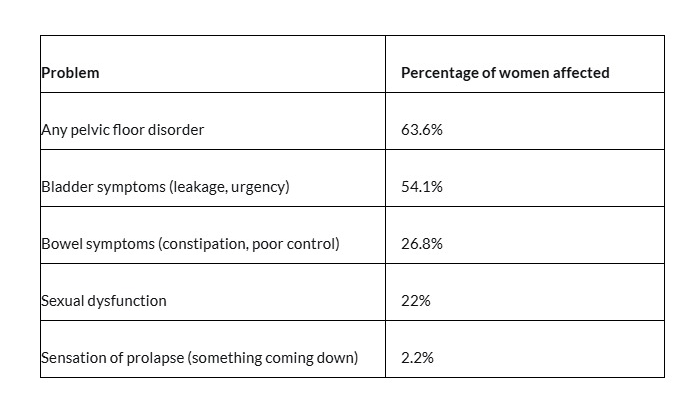
Even more worrying: 84% of these women thought their symptoms were normal after childbirth. And only 5.7% knew that pelvic floor exercises could help them.
Another 2024 study from Delhi found that 67% of first‑time mothers who had a C‑section reported pelvic floor symptoms at three months postpartum – almost identical to the 63% seen after vaginal delivery. In other words, C‑section offered no real protection.
Why Your Postpartum Recovery Plan Is Incomplete Right Now
When you left the hospital after your C‑section, your doctor probably told you:
- Keep your incision clean and dry.
- Take your iron and calcium tablets.
- Eat nutritious food and rest.
- Do not lift heavy weights for six weeks.
But how many of you were told: “Please start gentle pelvic floor exercises from day one” or “Come back if you leak urine even once”?
Very few. Because pelvic floor health is still not a routine part of postpartum care in most Indian hospitals. That is why your current recovery plan is incomplete.
The Consequences of Ignoring Your Pelvic Floor
If you do nothing, small problems can become big ones over months or years:
- You may stop laughing fully at your friend’s joke, afraid of leaking.
- You may avoid going to the temple, a wedding, or a parent‑teacher meeting because you cannot find a clean toilet quickly.
- You may give up your morning walk or yoga class because you leak with every step.
- You may quietly suffer during intimate moments with your husband, feeling something is wrong but too ashamed to speak.
This is not how any mother should live. And the good news is – you can prevent and even reverse most of these problems.
How to Protect Yourself: A Simple, Patient‑Friendly Action Plan
You do not need expensive equipment or complicated surgeries. Most pelvic floor disorders improve dramatically with a simple, daily habit: Pelvic Floor Muscle Training (Kegel exercises).
Step 1: Find the Right Muscles
The next time you pass urine, try to stop the flow mid‑stream. Feel that squeeze and lift? Those are your pelvic floor muscles. (Do this only once to identify the muscles – not regularly, as it can harm your bladder.)
Alternatively, imagine you are trying to hold in a gas passage. Squeeze and lift upward.
Step 2: Do the Exercises Correctly
- Slow squeezes: Squeeze your pelvic floor muscles and hold for 3 to 5 seconds. Then relax completely for 3 to 5 seconds. Repeat 10 times.
- Fast squeezes: Squeeze and release quickly, like a flicker. Repeat 10 times.
- Rest: Take a 10‑second rest between each set.
- Posture: Lie down or sit comfortably. Keep your stomach, thighs, and buttocks relaxed. Breathe normally.
Step 3: How Often and When to Start After C‑Section
- First week after delivery: As soon as you feel comfortable (and not in severe pain), try very gentle, short squeezes. Even 2‑3 repetitions, twice a day, are fine.
- By 4‑6 weeks: After your doctor clears you, aim for 3 sets of 10 slow squeezes and 3 sets of 10 fast squeezes, every single day.
- Long term: Make it a lifelong habit – like brushing your teeth. A few minutes a day can save you from years of trouble.
Step 4: Lifestyle Changes That Help
- Avoid chronic constipation: Drink plenty of water, eat fibre‑rich foods (vegetables, fruits, whole grains). Never strain on the toilet. If needed, take a mild stool softener after consulting your doctor.
- Maintain a healthy weight: Extra body weight puts constant pressure on your pelvic floor.
- Lift your baby correctly: Squat down with a straight back, hold your baby close to your chest, and use your leg muscles to stand up. Do not bend from your waist.
- Strengthen your deep core: Gentle breathing exercises that pull your lower belly inwards can support your pelvic floor.
When Should You See a Doctor? (Do Not Wait)
You must consult a gynaecologist or a pelvic floor physiotherapist if:
- You leak urine more than once a week.
- You feel a bulge or pressure in your vagina.
- You have to rush to the toilet suddenly and sometimes do not make it in time.
- You have pain during sex that started after childbirth.
- Your symptoms are making you avoid social outings, exercise, or daily work.
Remember: There is no shame in these problems. They are medical conditions, not punishments. And they are treatable.
Your Complete Postpartum Recovery Plan – Revised
Starting today, your recovery plan must include:
Daily pelvic floor exercises – 5 minutes, morning and evening.
A high‑fibre, hydrating diet – to avoid constipation and straining.
Correct lifting and sitting posture – protect your pelvic floor with every move.
Awareness – notice early signs like occasional leakage and act on them.
Open conversation – talk to your doctor, your mother, or a trusted friend. Breaking the silence is healing.
Final Words to Every Indian Mother
You brought a life into this world. Your body has done something extraordinary. It deserves respect, care, and complete healing – not just on the outside, but deep inside where no one sees.
The 63% statistic is not meant to scare you. It is meant to wake us all up mothers, families, and doctors – so that no woman suffers silently.
You have the power to protect yourself. Start your pelvic floor exercises today. Share this article with a friend who recently had a baby. And if you need help, reach out without hesitation.
Need Personal Guidance? Dr. Shweta Wazir Is Here for You
If you are experiencing any pelvic floor symptoms after your C‑section or vaginal delivery – or if you simply want to ensure your postpartum recovery is complete – consult an expert who understands Indian women’s needs.
Dr. Shweta Wazir
Gynaecologist
Motherhood Hospital, Gurgaon
🌐 Website: www.drshwetawazir.com
📞 Phone: +91 84481 28007
Take that first step today. Your future self – healthy, confident, and free – will thank you.
Leave A Comment