
Best Gynecologist Clinic in Gurgaon



May 28, 2026
Feeling the warmth of the sun can bring joy and renewal, but for those planning a family, it also brings a crucial question: Does summer heat truly impact fertility? It is an understandable concern, and the answer requires a thoughtful, evidence-based look at how our bodies react to high temperatures. Today, we’ll explore this important topic and, importantly, provide a clear, actionable roadmap for protecting your reproductive health and planning a healthy pregnancy during the warmer months.
Does Heat Affect Fertility? The Scientific Perspective on Summer Stress
Yes, scientific evidence indicates that prolonged exposure to high environmental temperatures can indeed influence both male and female fertility. This isn’t merely about feeling uncomfortable; it involves tangible biological changes. For women, intense heat can trigger a domino effect of hormonal imbalance, potentially leading to irregular menstrual cycles and reduced ovarian function.
Research has found that heat exposure can impair the delicate hormonal balance between the hypothalamus, pituitary, and ovaries, the axis that controls ovulation. When this is disrupted, it can lead to ovulation disorders. Furthermore, high temperatures have been linked to reduced anti-Müllerian hormone (AMH) levels, which is a marker of ovarian reserve, the quantity of eggs remaining in a woman’s ovaries. This means that extreme heat may, over time, affect a woman’s egg quality and quantity, making conception more challenging.
Key Medical Findings: Heat’s Impact on Reproductive Health
The effects of extreme heat on conception are not just theoretical; they are backed by robust medical data. To help you understand the full scope, here is a summary of key findings from various research studies:
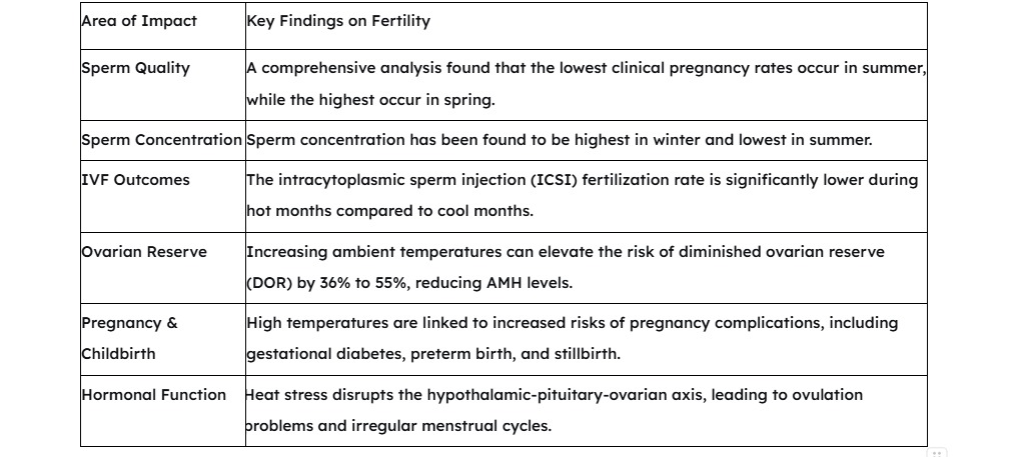
The increased vulnerability is also due to the body’s natural response to rising temperatures. To cool itself, the body expands blood vessels, causing blood pressure to drop. This can reduce blood flow to the uterus, potentially affecting the developing embryo. Additionally, dehydration from excessive sweating can lead to lower amniotic fluid volumes, which is critical for fetal movement and growth, and can cause electrolyte imbalances that stress the mother’s system.
The Journey to Motherhood: Understanding the Risks to Mom and Baby
Recognizing the potential risks is the first step toward proactive management. For women who are already pregnant, high heat can pose several serious threats. As highlighted by experts at Manipal Hospitals, these include:
- Threat of Miscarriage and Preterm Labour: A high core body temperature, sometimes rising by just 1°C above normal, can induce spontaneous miscarriage or premature labour. Even short periods of extreme heat exposure have been linked to these serious outcomes.
- Risk of Low Birth Weight and Stillbirth: Prolonged heat stress can compromise placental function, which is the baby’s lifeline for oxygen and nutrients. This can result in the baby having a low birth weight or, in tragic cases, can lead to stillbirth.
- Potential for Birth Defects: Exposure to high heat during the first trimester, a critical period for organ development, has been associated with an increased risk of neural tube defects and other congenital abnormalities.
- Dehydration and Amniotic Fluid Loss: Pregnancy naturally makes a woman more susceptible to dehydration. In extreme heat, this can quickly progress, leading to a reduction in the volume of amniotic fluid that cushions and protects the baby in the womb.
Practical Summer Fertility Care Tips for Indian Women
The good news is that you don’t have to put your family planning on hold during the summer. By embracing thoughtful, culturally tailored lifestyle adjustments, you can significantly mitigate the risks and create a healthy environment for conception. For Indian women, many of these tips align beautifully with traditional wisdom.
1. The Golden Rule: Stay Profoundly Hydrated
Water is the first line of defense against heat stress. Your goal should be to drink ample water before you even feel thirsty. A simple rule of thumb is to ensure your urine remains a pale yellow colour. While plain water is excellent, certain traditional Indian beverages offer enhanced benefits.
- Embrace Nimbu Pani (fresh lemon water) for its vitamin C and electrolyte content.
- Sip on Chaas or Mattha (salted buttermilk) , which is naturally cooling and an excellent probiotic.
- Hydrating fruits and vegetables are also crucial. As Dr. Suhasini Inamdar from Motherhood Hospitals, Bangalore suggests, include plenty of water-rich foods like watermelon, cucumber, muskmelon, and pears in your diet.
2. Nourish Your Body with a Cooling Diet
What you eat can either raise or lower your body’s internal temperature. The Indian summer provides a bounty of naturally cooling foods.
- Prioritize Fresh and Light: Eat small, frequent meals to aid digestion. Focus on fresh, seasonal vegetables, green salads, and whole grains like millets (jowar, ragi). Avoid heavy, spicy, and deep-fried foods that generate internal heat and can trigger heartburn and bloating.
- Embrace Nature’s Coolants: Coconut water is excellent for its potassium content. Curd and yogurt are not just cooling but also promote good gut health.
- Be Mindful of Food Safety: The risk of food-borne infections rises in summer. Avoid consuming cut fruits or chaat items that have been left out for long periods.
3. Smart Scheduling and Practical Modifications
Sometimes, the simplest changes to your daily routine can have the most profound impact.
- Avoid Peak Sun Hours (11 AM to 4 PM): This is when the sun’s rays are most intense and the risk of heat exhaustion, dizziness, and overheating is highest. Schedule your errands, morning walks, and any outdoor appointments for the cooler parts of the day, such as early morning or after sunset.
- Dress for Comfort and Breathability: Replace synthetic or tight-fitting clothes with loose, comfortable cotton or linen garments in light colours to allow your skin to breathe and regulate its temperature.
- Keep Your Environment Cool: Do not hesitate to use fans and air conditioners. A cool, comfortable home is not a luxury; it is a necessity for a healthy pregnancy or conception journey.
Planning Your Pregnancy: Key Considerations for Summer Conception
If you are planning to conceive during the summer, it’s about being more intentional, not more fearful.
- Tracking Your Cycle Accurately: The summer heat can sometimes mask early pregnancy symptoms or alter your basal body temperature. If you are using a fertility tracking app, pay more attention to cervical mucus changes alongside temperature shifts for a more accurate picture.
- Protecting Your Partner’s Fertility: Men can also be affected, as scrotal temperatures need to stay cool for optimal sperm production. Encourage your partner to wear loose-fitting cotton boxers and to avoid placing laptops directly on laps for extended periods during the summer.
When to Seek Professional Help Immediately
While some discomfort is normal, certain warning signs should never be ignored. If you or a pregnant family member experiences the following, consult a doctor immediately:
- A severe headache that does not improve with rest and water.
- Sudden, heavy swelling in the face, hands, or feet.
- Blurred vision or seeing flashes of light.
- A fever (above 100°F).
- Feeling faint or experiencing episodes of fainting.
- For expectant mothers, a noticeable reduction in the baby’s movements.
Charting Your Course to a Healthy Summer Conception
Planning a pregnancy is a beautiful and hopeful journey. While the summer sun can present unique challenges, it does not need to be an insurmountable barrier. By understanding the science, recognizing the potential risks, and adopting these practical, culturally grounded tips, you are not just protecting your health, you are actively creating the safest and most nurturing environment for your future baby. Remember to listen to your body, prioritise deep hydration and rest, and maintain open communication with your healthcare provider.
Your path to motherhood is a deeply personal one, and you don’t have to walk it alone. At Dr. Shweta Wazir’s practice, we believe in empowering you with knowledge and providing compassionate, expert care tailored to your unique needs. Whether you have questions about heat and fertility or are ready to begin your pregnancy planning journey, our clinic is here to support you every step of the way.
Take the first step towards a healthy, happy pregnancy today.
Visit our website: https://www.drshwetawazir.com/
Or give us a call: +91 84481 28007
Leave A Comment