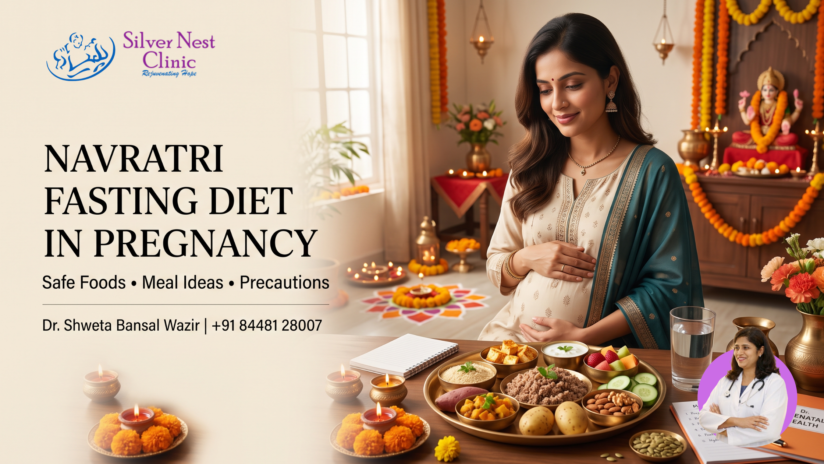
Navratri fasting is an important religious practice for many Indian women. During these nine days, some women avoid grains, pulses, certain vegetables and other foods while eating a limited selection of fasting foods. For a pregnant woman, however, dietary restrictions need additional consideration because pregnancy increases the body’s nutritional requirements.
This often leads to practical questions: What can I eat during Navratri fasting in pregnancy? Which fasting foods are nutritious? How can I stay hydrated? And when should I avoid fasting altogether?
There is no single fasting plan suitable for every pregnant woman. Your trimester, health, pregnancy history, nutritional status and any medical complications should be considered before deciding whether to fast.
Is Navratri Fasting Safe During Pregnancy?
There is limited research specifically on Navratri fasting during pregnancy. Most available medical research on religious fasting during pregnancy relates to Ramadan, which has a different fasting pattern from many Navratri practices.
Recent reviews have found no consistent evidence that Ramadan fasting increases preterm birth or significantly affects birth weight, but researchers also emphasize limitations in the available evidence and the lack of firm evidence-based guidelines for fasting during pregnancy.
Therefore, these findings should not be interpreted as proof that every pregnant woman can safely follow a prolonged or restrictive fast.
For some women, a modified religious diet may be reasonable after discussing it with their obstetrician. For others, particularly those with pregnancy complications or inadequate nutritional intake, fasting may not be appropriate.
Navratri Fasting Diet for Pregnant Women: What Should You Eat?
The main goal during pregnancy is not simply to choose foods that are permitted during a fast. The goal is to maintain adequate nutrition, hydration and regular nourishment within the boundaries of your religious practice.
1. Include Protein-Rich Foods
Protein supports the growth and development of the baby and helps meet the increased nutritional demands of pregnancy.
Depending on your individual fasting rules, suitable choices may include:
- Milk
- Curd or yoghurt
- Paneer
- Nuts
- Seeds
- Other permitted protein-containing foods
Vegetarian pregnant women should pay particular attention to protein variety because restricting several food groups during fasting can make it harder to meet nutritional requirements.
2. Choose Fruits and Vegetables
Fruits and permitted vegetables can provide fibre, vitamins, minerals and carbohydrates.
Try to include different varieties rather than depending on only bananas, potatoes or one particular fruit throughout the day.
Wash fresh fruits and vegetables carefully before eating them. Good food hygiene is particularly important during pregnancy because certain food-borne infections can be harmful to the mother and baby.
3. Include Suitable Fasting Grains and Starchy Foods
Depending on your fasting tradition, foods such as kuttu, rajgira, potatoes and sweet potatoes may be included.
These foods can provide energy, but preparation matters.
For example, choosing a home-cooked kuttu preparation with curd and vegetables can provide greater nutritional variety than eating several servings of deep-fried kuttu puri.
Starchy foods are an important source of energy during pregnancy, and a balanced pregnancy diet should include appropriate carbohydrate sources.
4. Add Nuts and Seeds in Sensible Portions
Almonds, walnuts and other permitted nuts and seeds can be convenient during fasting. They provide energy, protein and healthy fats.
However, they are calorie-dense, so a small portion can be sufficient. They should complement the diet rather than replace balanced meals.
Healthy Navratri Meal Ideas for Pregnant Women
A fasting meal does not need to be complicated. The emphasis should be on variety and balance.
Breakfast
A possible breakfast could include milk or curd with fruit and a small portion of nuts.
If you experience morning sickness or feel uncomfortable after eating a large meal, smaller portions may be easier to tolerate.
Mid-Morning Snack
Choose a fresh fruit or another suitable snack according to your doctor’s advice and fasting rules.
Lunch
A balanced lunch could include kuttu or rajgira, a permitted vegetable preparation and curd.
Avoid making fried puris the centre of every meal simply because they are permitted during fasting.
Evening Snack
Milk, curd, fruit or a small portion of nuts can be considered, depending on your nutritional needs.
Dinner
A suitable dinner could combine a permitted carbohydrate source with vegetables and a protein-rich food such as paneer or curd.
Your exact meal plan should be individualized according to your pregnancy and dietary requirements.
Navratri Fasting During Pregnancy: Foods to Limit
Some traditional fasting foods are best consumed in moderation.
Limit Deep-Fried Foods
Sabudana vada, pakoras, fried potatoes, chips and puris can be high in fat and calories. Eating them frequently may leave less room for nutrient-rich foods.
Limit Excessively Sugary Foods
Fasting sweets, sweetened drinks and desserts can add considerable sugar without providing the variety of nutrients needed during pregnancy.
Do Not Depend Only on Fruit
Fruit is nutritious, but eating only fruit throughout the fasting period may make it difficult to obtain enough protein and overall dietary variety.
Pairing fruit with an appropriate dairy food or another permitted protein source can make a snack more balanced.
Hydration During Navratri Fasting in Pregnancy
Hydration is one of the most important considerations during pregnancy.
If your religious fast permits water and other fluids, drink regularly rather than waiting until you become very thirsty.
Pregnancy can already make some women prone to nausea, vomiting and tiredness. Insufficient fluid intake can make weakness and dizziness more noticeable.
If you have persistent vomiting or cannot keep fluids down, fasting should not take priority over medical care.
Who Should Avoid Fasting During Pregnancy?
A woman should discuss fasting with her obstetrician before Navratri if she has significant vomiting, dehydration, anaemia, diabetes, poor weight gain, a high-risk pregnancy or another medical condition requiring regular food, fluids or medication.
Women taking prescribed medicines or pregnancy supplements should not change their medication schedule or stop supplements without discussing it with their doctor.
Iron deficiency is common during pregnancy, and iron supplementation may be recommended when required. Pregnancy supplements should therefore be managed according to individual medical advice.
Warning Signs: When Should You Stop Fasting?
Do not try to continue a fast despite significant symptoms.
Seek medical advice if you experience:
- Persistent dizziness or fainting
- Severe weakness
- Repeated vomiting
- Difficulty keeping fluids down
- Markedly reduced urination
- Severe abdominal pain
- Any other concerning pregnancy symptom
These symptoms should not simply be attributed to fasting without appropriate assessment.
Final Thoughts on a Safe Navratri Fasting Diet During Pregnancy
A healthy Navratri during pregnancy is about finding a safe balance between religious practices and the nutritional needs of the mother and baby.
If your obstetrician agrees that a modified fast is appropriate, build your meals around protein-rich foods, suitable carbohydrates, fruits, vegetables, healthy fats and adequate fluids. Avoid allowing fried snacks, sweets or highly restricted eating to replace balanced nutrition.
Most importantly, there is no universal fasting plan for every pregnant woman. Available research on religious fasting during pregnancy remains limited, and individual maternal health can significantly change the advice.
Before Navratri begins, discuss your intended fasting pattern with your obstetrician. A small modification to your fasting routine may help you observe the festival while continuing to support your health and your baby’s development.
For personalised pregnancy, nutrition and obstetric guidance, consult Dr. Shweta Bansal Wazir.
Dr. Shweta Bansal Wazir
MBBS, DGO, MD (Obs & Gyn), MRCOG (UK)
Obstetrician & Gynaecologist
Phone: +91 84481 28007



Leave A Comment