Menopause is a natural stage of a woman’s life, but the physical and emotional changes associated with it can sometimes be confusing or uncomfortable. Many Indian women experience changes in their menstrual cycle, hot flashes, disturbed sleep, mood swings and vaginal dryness without immediately recognising them as menopause symptoms. Some women may also notice these changes in their early forties.
Understanding the early signs of menopause, the average age at which it occurs, its different stages and available treatment options can help women make informed decisions about their health. Menopause is not an illness, and women do not have to silently tolerate symptoms that affect their everyday lives.
What Is Menopause and Why Does It Happen?
Menopause is a natural biological process that marks the end of a woman’s reproductive years. It occurs when the ovaries gradually reduce their production of reproductive hormones, particularly oestrogen, and eventually stop releasing eggs.
A woman is considered to have reached menopause when she has not experienced a menstrual period for 12 consecutive months, provided there is no other medical explanation for the absence of periods.
The reduction in oestrogen affects more than menstruation. This hormone also plays an important role in maintaining bone strength, vaginal health, temperature regulation, sleep and emotional well-being. Consequently, hormonal changes can produce several physical and psychological symptoms.
What Is the Average Age of Menopause in Indian Women?
Menopause generally occurs between the ages of 45 and 55 worldwide. However, the average age is reported to be approximately 46–47 years among women in India and Pakistan, according to patient information published by the Royal College of Obstetricians and Gynaecologists (RCOG).
Some women experience menopause earlier, while others continue menstruating into their early fifties. Genetics, overall health, smoking, certain medical conditions and treatments can influence its timing.
Menopause before the age of 45 is known as early menopause, whereas menopause before 40 is called premature menopause or premature ovarian insufficiency (POI). Women experiencing symptoms at a younger age should seek medical assessment rather than assuming that their menstrual changes are normal.
Early Signs and Common Menopause Symptoms in Women
The first signs of menopause usually develop gradually during perimenopause. Every woman experiences this transition differently. Some have only mild changes, while others experience symptoms that affect their family responsibilities, professional activities and quality of life.
1. Irregular Periods and Changes in Menstrual Flow
Changes in menstrual patterns are often among the earliest signs of menopause. Periods may become shorter, longer, lighter or heavier than usual. Some women may skip periods for several months before menstruation stops completely.
These changes occur because ovarian hormone production becomes unpredictable. However, unusually heavy bleeding, bleeding between periods or prolonged menstrual bleeding should not automatically be attributed to menopause.
2. Hot Flashes and Night Sweats
Hot flashes are among the most recognised menopause symptoms. A woman may suddenly experience intense warmth around her face, neck and chest, sometimes accompanied by sweating, skin flushing, dizziness or a rapid heartbeat.
When these episodes occur during sleep, they are called night sweats. They can disturb sleep, cause discomfort and leave women feeling exhausted the following morning.
Wearing breathable cotton clothing, keeping the bedroom cool and identifying personal triggers may help reduce discomfort.
3. Mood Swings, Anxiety and Irritability
Hormonal fluctuations can influence emotional well-being. Some women experience sudden mood changes, increased irritability, anxiety, low mood or a reduced ability to manage everyday stress.
Family responsibilities, work pressures and inadequate sleep may make these feelings more difficult to manage. Persistent sadness, loss of interest in daily activities or significant anxiety should be discussed with a healthcare professional.
4. Sleep Problems and Constant Tiredness
Difficulty falling asleep, waking frequently during the night and feeling tired despite adequate time in bed are common complaints during menopause.
Night sweats may contribute to disturbed sleep, while hormonal changes can also influence sleep patterns. Maintaining a consistent bedtime, exercising regularly and limiting evening caffeine may improve sleep quality.
5. Vaginal Dryness and Changes in Sexual Health
Lower oestrogen levels can make vaginal tissues thinner, less elastic and less naturally lubricated. Women may experience vaginal dryness, itching, irritation, burning sensations or discomfort during sexual intercourse.
Some may also notice urinary urgency, frequent urination or recurring urinary tract symptoms. These concerns are common but treatable. Vaginal moisturisers, lubricants and prescribed local treatments may provide relief.
6. Joint Pain, Weight Changes and Brain Fog
Other possible menopause symptoms include joint stiffness, muscle aches, headaches, hair thinning, reduced sexual desire and changes in body weight, particularly around the abdomen.
Some women also experience brain fog, forgetfulness or difficulty concentrating. Persistent symptoms should be assessed because conditions such as thyroid disorders, vitamin deficiencies and anaemia can produce similar complaints.
Understanding the Three Stages of Menopause
Menopause is a gradual transition rather than a single event. It is commonly understood through three stages.
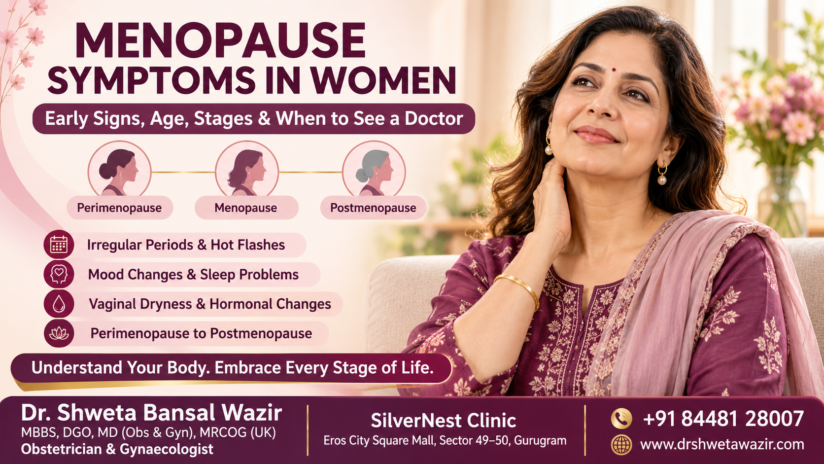
Perimenopause: This is the transitional period before menopause. Hormone levels fluctuate, periods become irregular and symptoms such as hot flashes, night sweats and mood changes may begin. It can last several years.
Menopause: This stage is confirmed after 12 consecutive months without menstruation, when there is no other explanation for the absence of periods.
Postmenopause: This refers to all the years following menopause. Some symptoms gradually improve, while vaginal dryness and other changes may continue. Bone health and cardiovascular health also become important considerations.
How Can Menopause Symptoms Be Managed?
Women do not need to accept persistent discomfort as an unavoidable part of ageing. Several approaches can help manage menopause symptoms.
A balanced diet containing calcium-rich foods, adequate protein, fruits, vegetables and vitamin D supports overall health. Indian dietary options such as milk, curd, paneer, ragi, pulses and green leafy vegetables can contribute to nutritional requirements.
Regular physical activity, including walking, yoga, strength training and weight-bearing exercises, supports muscle and bone health. Maintaining a healthy weight, avoiding smoking and reducing excessive caffeine intake may also help.
For women with troublesome symptoms, hormone replacement therapy (HRT), also called menopausal hormone therapy, may be considered. Non-hormonal medicines, psychological support and vaginal treatments are additional options. Treatment should always be selected after reviewing individual medical history, symptoms and potential risks. Women should avoid starting hormonal medicines or supplements without medical advice.
When Should You See a Gynaecologist for Menopause Symptoms?
Consult a gynaecologist if irregular periods, hot flashes, sleep disturbances, mood changes or vaginal discomfort begin affecting your daily life. Medical assessment is particularly important if symptoms appear before the age of 45.
Seek prompt medical evaluation for unusually heavy bleeding, bleeding between periods or any vaginal bleeding after 12 months without menstruation. Even light spotting after menopause requires investigation.
A gynaecologist can assess your symptoms, menstrual history and medical background, recommend appropriate investigations when necessary and discuss personalised treatment options. For otherwise healthy women aged 45 or older, menopause can usually be identified clinically without routine hormone testing.
Conclusion
Menopause is an important transition in every woman’s life, not the end of her health, confidence or independence. Recognising the early signs, understanding hormonal changes and seeking timely medical guidance can make this stage considerably more comfortable.
With the right information, healthy lifestyle choices and individualised medical care, Indian women can maintain their physical health, emotional well-being and quality of life during and after menopause.
For personalised guidance on menopause symptoms and women’s hormonal health, consult Dr. Shweta Bansal Wazir, MBBS, DGO, MD (Obs & Gyn), MRCOG (UK).
Website: https://www.drshwetawazir.com/
Contact: +91 84481 28007



Leave A Comment