A teenage girl may train every day, eat carefully, maintain an athletic physique and appear extremely healthy from the outside. But if her periods suddenly become irregular, her energy levels keep falling or she starts developing repeated stress injuries, these changes should not simply be considered part of being a serious athlete.
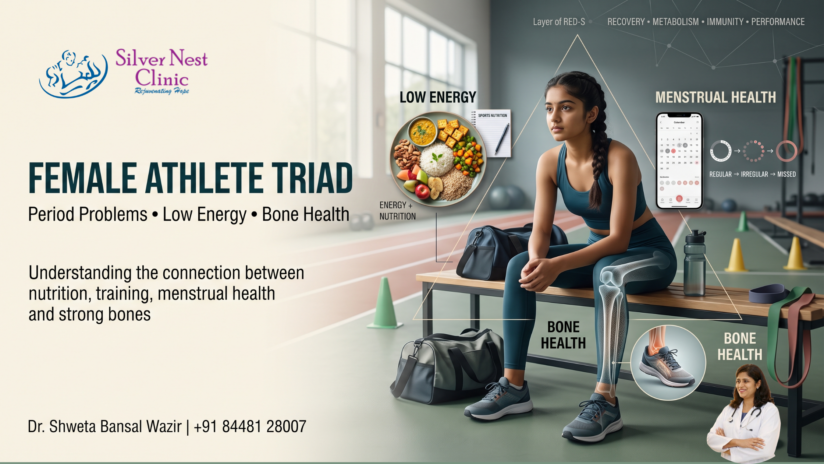
This combination can sometimes point towards the Female Athlete Triad, a condition involving three closely connected areas: low energy availability, menstrual dysfunction and reduced bone health. An athlete does not necessarily need to have all three problems before medical attention is appropriate. Even one component can be an important warning sign.
Modern sports medicine also uses the broader term Relative Energy Deficiency in Sport (RED-S) because inadequate energy availability can affect many systems beyond periods and bones, including metabolism, immunity, cardiovascular health, recovery and athletic performance.
What Is the Female Athlete Triad?
The Female Athlete Triad describes the relationship between:
- Low energy availability
- Menstrual dysfunction
- Low bone mineral density or poor bone health
These problems are interconnected. When an athlete consistently consumes less energy than her body needs for exercise, growth, daily activities and normal physiological functions, the body may begin conserving energy. Reproductive function can be affected, periods may become irregular or disappear, and bone health may gradually suffer.
This does not mean that exercise itself is harmful. Regular physical activity is beneficial. The concern is when training demands are not matched by adequate nutrition and recovery.
Can Excessive Training Cause Period Problems?
Intense training can contribute to menstrual changes, particularly when combined with insufficient food intake, rapid weight loss, inadequate recovery or significant physical and psychological stress.
A girl who previously had regular periods may begin noticing longer menstrual cycles, lighter periods, skipped periods or complete absence of menstruation. These changes should not automatically be dismissed as a normal consequence of sports.
Menstrual function is an important indicator of overall health. Persistent changes may suggest that the body is not receiving enough energy to support both athletic activity and normal physiological functions.
For teenage athletes, this is particularly important because the body is still developing. Adequate nutrition is needed not only for exercise but also for growth, hormonal development and building strong bones.
Low Energy Availability: The Hidden Problem
One of the most important factors behind the Female Athlete Triad is low energy availability.
This occurs when the energy consumed through food is insufficient to meet the body’s needs after accounting for the energy used during exercise. It can happen intentionally through restrictive dieting, but it may also happen unintentionally when an athlete simply does not realise how much nutrition her training requires.
For example, a young runner may increase her training significantly while continuing to eat the same amount of food. A dancer may restrict calories because she wants to maintain a particular body shape. A swimmer or gymnast may avoid certain foods because of concerns about weight.
Over time, the mismatch between food intake and energy expenditure can affect normal body functions.
Importantly, low energy availability does not necessarily mean that an athlete is underweight. An athlete can have a seemingly normal body weight and still experience problematic low energy availability.
Female Athlete Triad and Menstrual Dysfunction
Periods can change when the body does not have sufficient energy to support normal reproductive hormone function.
Some athletes may develop:
Irregular periods: Menstrual cycles become unpredictable or occur less frequently.
Missed periods: A previously regular cycle may disappear for several months.
Amenorrhea: Menstruation stops altogether.
These changes can sometimes occur because of functional hypothalamic amenorrhea, in which the brain reduces reproductive hormone signalling in response to factors such as inadequate energy availability, excessive exercise or significant stress.
However, not every irregular period in an athlete is caused by the Female Athlete Triad. Pregnancy, polycystic ovary syndrome, thyroid disorders, elevated prolactin and other medical conditions can also cause menstrual irregularities. Proper evaluation is therefore important rather than assuming that training is the only explanation.
How Does the Female Athlete Triad Affect Bone Health?
Bone health is one of the most important long-term concerns.
Bones are living tissues that constantly undergo formation and breakdown. Adequate nutrition, hormonal health and appropriate physical loading all contribute to maintaining healthy bones.
When low energy availability and menstrual dysfunction persist, bone formation and bone mineral health can be affected. This may increase vulnerability to bone stress injuries and stress fractures. The risk can be particularly concerning in adolescent athletes, whose years of growth are an important period for developing bone strength.
A teenage athlete who repeatedly develops shin pain, foot pain or other exercise-related bone injuries should therefore be evaluated rather than simply being advised to continue training through the discomfort.
Stress Fractures in Female Athletes
A stress fracture is a small crack or area of injury caused by repeated loading of a bone.
Athletes with problematic low energy availability, menstrual dysfunction or poor bone health may have an increased risk of bone stress injuries. Repeated injuries can interfere with training, education and everyday activities and may have longer-term consequences if the underlying cause is not addressed.
Warning signs may include persistent localised bone pain, pain that worsens with activity, tenderness over a specific area or pain that eventually occurs even with ordinary movement.
Ignoring these symptoms and continuing high-impact training can make an injury more difficult to manage.
Nutrition for Teenage Athletes and Women
Good sports nutrition is not simply about eating more or less. It is about providing enough energy and nutrients to support training, recovery, growth and normal body functions.
A balanced eating pattern should provide adequate carbohydrates, protein, healthy fats, vitamins and minerals. Calcium and vitamin D are particularly relevant to bone health, while sufficient overall energy intake is essential for maintaining normal physiological function.
Athletes should avoid aggressive calorie restriction or eliminating major food groups without professional guidance.
For vegetarian athletes, careful attention may also be needed to ensure adequate protein, iron, calcium, vitamin B12 and other nutrients depending on the individual diet.
A sports dietitian can help an athlete understand how nutritional requirements change with training volume, competition schedules and growth.
Who Is at Risk of Female Athlete Triad?
The Female Athlete Triad can occur in athletes participating in many different sports.
It may be seen more often where there is pressure to maintain a particular body shape, weight or power-to-weight ratio. Sports such as running, gymnastics, dance and endurance disciplines can involve these pressures, although the problem is not limited to these activities.
Risk may increase when an athlete combines high training loads with restrictive eating, rapid weight loss, inadequate recovery or pressure to remain very lean.
It is also important to remember that the problem is not limited to elite athletes. School-level and recreational athletes can also develop problematic low energy availability.
Female Athlete Triad and Long-Term Health
The effects of low energy availability can extend beyond periods and bones.
The modern RED-S framework recognises potential effects on reproductive function, metabolic health, immunity, cardiovascular and blood-related health, psychological well-being, recovery and athletic performance.
For young girls, protecting bone development is especially important. Persistent menstrual dysfunction and poor nutrition during adolescence may affect an important period of skeletal development.
This is why treating the underlying problem early is preferable to waiting until a significant injury or prolonged absence of periods occurs.
How Is Female Athlete Triad Diagnosed?
There is no single test that confirms the Female Athlete Triad.
A doctor may ask about:
- Menstrual history and changes in cycle pattern
- Training frequency and intensity
- Recent weight changes
- Food intake and dietary restrictions
- Previous stress fractures or recurrent injuries
- Sleep and recovery
- Medications and other medical conditions
- Pregnancy possibility where relevant
Depending on the individual situation, evaluation may include blood tests, nutritional assessment, pregnancy testing, hormonal evaluation or bone mineral density assessment.
The purpose is not simply to identify whether an athlete has the Triad, but to understand why her periods, energy levels or bone health have changed.
How Is Female Athlete Triad Treated?
Treatment focuses on correcting the underlying imbalance rather than simply giving medication for irregular periods.
This may involve increasing energy and nutrient intake, adjusting training intensity, allowing adequate recovery and addressing restrictive eating or other nutritional concerns.
A multidisciplinary approach can sometimes involve a gynecologist, sports physician, dietitian, physiotherapist and mental-health professional, depending on the athlete’s needs.
Training may need to be modified temporarily when there is significant injury or medical risk. The aim is to protect health while creating a safe pathway back to sport.
The recovery process can take time. Menstrual function and bone health may not return immediately after dietary or training changes, particularly when the problem has been present for a long period.
When Should a Female Athlete See a Gynecologist?
A consultation is appropriate if an athlete notices persistent menstrual changes, repeated missed periods, unexplained fatigue, significant weight loss, restrictive eating, recurrent stress injuries or reduced ability to recover from training.
A period should not disappear simply because someone is exercising seriously.
For teenage athletes, parents and coaches also have an important role. A young athlete who becomes increasingly focused on weight, food restriction, performance pressure or repeated injuries may need support rather than encouragement to train harder.
Female Athlete Triad Is a Health Signal, Not a Sign of Athletic Success
Being disciplined about sport does not mean ignoring the body’s warning signs.
Irregular periods, persistent low energy and recurrent bone injuries can be signals that an athlete’s nutritional intake, training load and recovery are no longer adequately supporting her health.
The Female Athlete Triad remains an important clinical concept, while the broader RED-S framework helps doctors understand the wider effects of problematic low energy availability. Early recognition can help protect menstrual health, bone strength, athletic performance and long-term well-being.
About Dr. Shweta Bansal Wazir
Dr. Shweta Bansal Wazir is an MBBS, DGO, MD (Obs & Gyn), MRCOG (UK) Obstetrician and Gynecologist with an evidence-based approach to women’s reproductive and hormonal health. She provides consultation for menstrual problems, adolescent gynecology, pregnancy care, high-risk pregnancy and other women’s health concerns.
For consultation:
SilverNest Clinic
Eros City Square Mall, Shop 198FF
Opp. Rosewood Apartments, Sector 49–50, Gurgaon – 122018
Phone: +91 84481 28007
Website: drshwetawazir.com



Leave A Comment