For some women, pregnancy begins with a question that sounds simple but can feel surprisingly complicated: “Can I continue exercising now that I am pregnant?”
A woman who regularly runs, strength trains, swims, practises yoga or plays a sport may worry that exercise could harm her baby. Another woman who has never exercised regularly may wonder whether pregnancy is the right time to start.
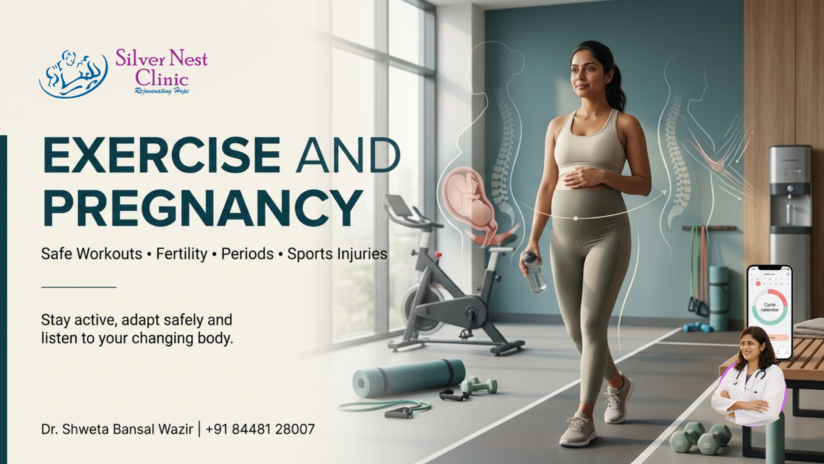
In most uncomplicated pregnancies, physical activity is not something that needs to be completely avoided. In fact, staying active can support physical fitness, mood, sleep and overall pregnancy health. The important part is understanding how exercise needs to change as the body changes.
Exercise also matters before pregnancy. Healthy physical activity can support general health while trying to conceive, but very intense training combined with inadequate nutrition, excessive weight loss or menstrual disturbances can affect reproductive health.
The goal is not to stop moving. It is to find the right balance between activity, nutrition, recovery and the needs of your individual pregnancy.
Exercise Before Pregnancy: Can It Support Fertility?
Being physically active before pregnancy can be part of a healthy preconception lifestyle. Regular moderate exercise supports cardiovascular fitness, healthy weight management, metabolic health and psychological well-being.
However, more exercise is not always better when a woman is trying to conceive.
Very intense training, particularly when combined with insufficient calorie intake, significant weight loss or low energy availability, can interfere with normal menstrual function. Irregular or absent periods may sometimes indicate that the body is not receiving enough energy to support reproductive function.
This is particularly relevant for female athletes, endurance runners, dancers and women involved in high-volume training.
If periods become consistently irregular while exercising intensely, it is better to investigate the cause rather than simply assuming that training is responsible.
Fertility depends on many factors, including ovulation, age, reproductive health, sperm health and underlying medical conditions. Exercise is one part of the larger picture.
Exercise During Pregnancy: Is It Safe?
For most women with an uncomplicated pregnancy, exercise during pregnancy is considered safe and beneficial when appropriately adapted.
Current guidance commonly recommends aiming for around 150 minutes of moderate-intensity activity across the week, although individual recommendations may differ depending on fitness level, pregnancy complications and medical history. Even shorter periods of activity can be useful.
Women who were already active before pregnancy can often continue many of their usual activities, with modifications as pregnancy progresses.
Women who were previously inactive do not need to suddenly begin intense workouts. Starting gently with activities such as walking and gradually increasing duration is generally more appropriate.
A simple practical guide is the conversation test. During moderate exercise, you should generally be able to talk. If you are too breathless to hold a conversation comfortably, the intensity may need to be reduced.
Which Workouts Are Safe During Pregnancy?
There is no single pregnancy workout that suits every woman. The safest choice depends on her health, fitness level, pregnancy stage and previous exercise experience.
Common activities that can often be incorporated into pregnancy include:
Walking: A simple, low-impact option that can be continued through much of pregnancy according to comfort.
Swimming: Water supports the increasing body weight and can make movement more comfortable as pregnancy progresses.
Stationary cycling: This can provide cardiovascular exercise without the same fall risk associated with outdoor cycling.
Prenatal yoga: Modified yoga can support mobility, relaxation and gentle strengthening.
Strength training: Women who already strength train may often continue with appropriate modifications and attention to technique, breathing and comfort.
Pelvic floor exercises: These can help strengthen the muscles supporting the bladder, bowel and reproductive organs and are an important part of pregnancy and postpartum pelvic health.
The important principle is adaptation rather than trying to maintain the exact same workout throughout all three trimesters.
Can You Run During Pregnancy?
Running is not automatically prohibited during pregnancy.
A woman who was an experienced runner before pregnancy may be able to continue, provided she remains comfortable and has no medical reason to avoid it. As the pregnancy progresses, however, changes in balance, body weight, pelvic pressure and joint comfort may make running less comfortable.
A woman who has never been a runner generally should not use pregnancy as the time to suddenly begin vigorous running.
Walking, swimming, stationary cycling or pregnancy-specific low-impact exercise may provide suitable alternatives.
The right exercise is one that supports fitness without pushing the body beyond what is appropriate for that pregnancy.
Exercise and Pelvic Health During Pregnancy
Pregnancy places increasing demands on the pelvic floor and surrounding muscles.
Pelvic floor exercises are often recommended during pregnancy because these muscles support the bladder, bowel and pelvic organs and are involved in continence and childbirth.
Some women may experience urinary leakage when coughing, sneezing, laughing or exercising. Others may develop pelvic heaviness, pressure or discomfort.
These symptoms should not simply be accepted as something a woman has to live with.
A women’s health physiotherapist can assess pelvic floor function and provide an individualized exercise programme when needed. Pelvic health support can be particularly useful for athletes who want to remain active during pregnancy and return safely to sport after childbirth.
What Sports Should Be Avoided During Pregnancy?
The main concern is not exercise itself but activities that create unnecessary risks such as falling, abdominal impact, overheating or decompression-related injury.
Activities that may need to be avoided or modified include contact sports with a significant risk of being hit, activities with a high risk of falling, scuba diving and certain high-risk adventure sports.
As pregnancy progresses, balance and the centre of gravity change. A sport that was comfortable before pregnancy may therefore become less suitable later.
Pregnant women should also avoid prolonged exercise lying flat on their backs if it causes dizziness or discomfort, particularly later in pregnancy.
Hot environments, dehydration and exercising through significant discomfort should also be avoided.
Exercise During Pregnancy and Sports Injuries
Pregnancy changes the body’s biomechanics. As the abdomen grows, posture, balance and movement patterns change.
This can affect how a woman runs, jumps, lifts weights or changes direction during sport.
Pain should not automatically be interpreted as a normal part of pregnancy.
Persistent joint pain, pelvic pain, back pain or a suspected sports injury deserves assessment, particularly if it changes the way you walk or exercise.
A physiotherapist experienced in women’s health or sports rehabilitation can sometimes help modify movement patterns and develop safer strengthening and rehabilitation exercises.
When Should Exercise Be Modified During Pregnancy?
A pregnancy workout may need to be reduced, changed or temporarily stopped if the woman develops symptoms or a pregnancy complication that makes her usual activity inappropriate.
Exercise may need individual modification in situations such as significant bleeding, certain placental problems, cervical or pregnancy complications, preterm labour concerns, significant maternal medical conditions or other circumstances identified by the obstetric team.
This is why an exercise plan should never be separated from antenatal care.
An athlete with a complicated pregnancy may need a very different exercise plan from a woman with an uncomplicated pregnancy, even if both had identical fitness levels before conception.
Warning Signs to Stop Exercise During Pregnancy
Exercise should be stopped and medical advice sought if concerning symptoms develop.
Important warning signs can include:
- Vaginal bleeding
- Leakage of fluid
- Regular painful contractions
- Significant dizziness or fainting
- Chest pain
- Unusual or severe shortness of breath
- Severe headache
- Significant weakness affecting balance
- New calf pain or swelling
Vaginal bleeding or significant pain during pregnancy should not be assumed to be caused by exercise and should be medically assessed.
The appropriate response depends on the stage of pregnancy and the individual circumstances, so women should follow the advice of their obstetrician or maternity team.
Should Exercise Stop During the Third Trimester?
Not necessarily.
For many women, physical activity can continue during the third trimester, but the type and intensity often need to change.
A growing abdomen can make running, jumping or certain strength exercises uncomfortable. Walking, swimming, stationary cycling, modified strength training, mobility exercises and pelvic floor work may become more practical.
The goal is no longer to compete with a pre-pregnancy performance.
The goal is to maintain safe movement, strength and fitness while respecting the body’s changing needs.
Exercise, Nutrition and Recovery During Pregnancy
Exercise cannot be separated from nutrition and recovery.
Pregnancy requires adequate nutrients to support maternal health and fetal development. Women who continue intensive training should pay particular attention to sufficient food intake, hydration, sleep and recovery.
Trying to aggressively lose weight during pregnancy is not recommended. Nutritional needs should be discussed with the obstetric team, particularly when a woman follows a restrictive diet or performs high-volume training.
For athletes, the challenge is often not simply exercising safely but ensuring that training demands do not exceed the body’s available resources.
Exercise After Pregnancy: Returning to Sport Safely
Returning to exercise after childbirth is another gradual process.
The timing depends on the type of birth, recovery, complications, pelvic floor symptoms and the woman’s overall health.
Walking and gentle pelvic floor exercises may be appropriate early after an uncomplicated birth when the woman feels ready, while high-impact exercise and heavy lifting generally require a more gradual return. Recovery may take longer after a caesarean birth or significant perineal injury.
Athletes should not feel pressured to return to their previous performance level immediately.
A staged return allows the pelvic floor, abdominal wall, joints, muscles and cardiovascular system to recover.
Exercise During Pregnancy Should Be Individualised
Pregnancy does not mean giving up an active lifestyle. For many women, it means learning how to exercise differently.
Walking, swimming, modified strength training, prenatal yoga and pelvic floor exercises can all have a place in a healthy pregnancy. Experienced athletes may continue more demanding activities with appropriate modifications when their pregnancy and medical condition allow it.
At the same time, irregular periods before conception, fertility concerns, previous sports injuries, pelvic symptoms or pregnancy complications may require additional assessment.
The most important question is not “Can every pregnant woman do this workout?”
It is “Is this activity appropriate for this woman, at this stage of her pregnancy, given her health and symptoms?”
That individual approach allows exercise to remain a positive part of pregnancy while keeping maternal and fetal safety at the centre of care.
About Dr. Shweta Bansal Wazir
Dr. Shweta Bansal Wazir is an MBBS, DGO, MD (Obs & Gyn), MRCOG (UK) Obstetrician and Gynecologist with an evidence-based approach to women’s reproductive and pregnancy care. She provides consultation for menstrual problems, fertility and preconception care, pregnancy, high-risk pregnancy and women’s health concerns.
SilverNest Clinic
Eros City Square Mall, Shop 198FF
Opp. Rosewood Apartments, Sector 49–50, Gurgaon – 122018
Phone: +91 84481 28007
Website: drshwetawazir.com



Leave A Comment