When Care, Nutrition, and Close Monitoring Create Miracles
Every pregnancy is unique, but some journeys remind us why modern obstetrics is as much about careful planning and personalized care as it is about medical expertise.
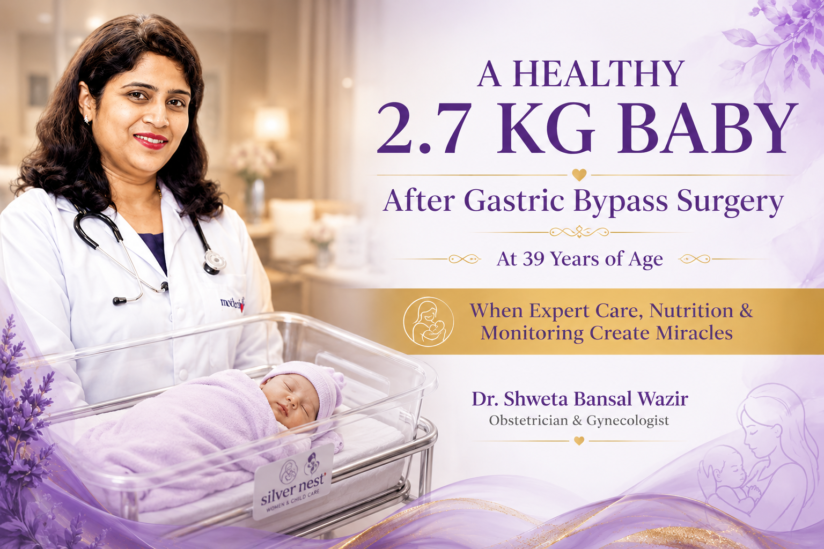
Recently, I had the privilege of delivering a healthy 2.7 kg baby to a 39-year-old mother who had undergone Roux-en-Y Gastric Bypass Surgery three years before conceiving. While the birth of every healthy baby is a celebration, this particular case carried special significance because pregnancy after bariatric surgery presents a unique set of challenges for both mother and baby.
For many women who have undergone weight-loss surgery, one of the biggest concerns is whether they will be able to conceive safely and deliver a healthy baby with normal growth. This story serves as an encouraging example that with proper medical guidance, nutritional support, and regular monitoring, successful pregnancy outcomes are very much achievable.
Understanding Pregnancy After Bariatric Surgery
Bariatric surgery has become increasingly common among women of reproductive age. Procedures such as Roux-en-Y Gastric Bypass are highly effective for weight loss and improving obesity-related conditions.
However, these surgeries also alter the body’s ability to absorb certain nutrients. During pregnancy, when nutritional demands increase significantly, maintaining adequate levels of iron, calcium, protein, Vitamin B12, and Vitamin D becomes critical.
One of the major concerns in pregnancies following gastric bypass surgery is fetal growth restriction. Due to altered nutrient absorption, babies may sometimes grow slower than expected inside the womb, leading to lower birth weights.
This makes achieving a healthy, normal birth weight baby a significant accomplishment requiring coordinated care throughout pregnancy.
The Patient’s Journey
At 39 years of age, this mother entered pregnancy with optimism and determination.
She had undergone Roux-en-Y Gastric Bypass Surgery three years earlier and had successfully maintained her health after the procedure.
Her pregnancy weight was approximately 92 kg, and by full term she weighed 104 kg. Throughout the pregnancy, the focus remained on balancing maternal health, nutritional adequacy, and optimal fetal growth.
Building a Strong Foundation Through Nutrition
Nutrition became the cornerstone of her antenatal care.
Because gastric bypass surgery can affect nutrient absorption, a comprehensive supplementation plan was implemented, including:
- Iron supplementation
- Calcium supplementation
- Vitamin D support
- Vitamin B12 supplementation
- High-quality protein intake
Regular consultations with a nutritionist ensured that dietary requirements were being met and that both mother and baby received adequate nourishment throughout pregnancy.
Rather than focusing solely on weight gain, the emphasis remained on nutritional quality and fetal well-being.
Enhanced Monitoring Throughout Pregnancy
Pregnancy after bariatric surgery requires more intensive surveillance compared to routine pregnancies.
To ensure healthy fetal development, we adopted a proactive monitoring strategy that included:
Frequent Ultrasound Examinations
Regular ultrasounds were performed to closely track fetal growth and development.
These scans allowed us to assess whether the baby was receiving adequate nutrition and growing according to gestational age.
Continuous Baby Weight Assessment
Special attention was given to monitoring estimated fetal weight throughout pregnancy.
The primary objective was to identify any signs of growth restriction at the earliest possible stage.
Multidisciplinary Care
The patient remained under continuous observation by both the obstetric team and nutrition specialists.
This collaborative approach ensured timely intervention whenever required.
The Final Weeks: A Positive Outcome
As the pregnancy progressed, fetal growth remained reassuring.
One of the most satisfying aspects of this case was seeing the baby maintain healthy growth despite the nutritional challenges commonly associated with gastric bypass surgery.
At term, the patient went into spontaneous labor naturally.
Given the favorable circumstances, a trial of labor was offered with the hope of achieving a vaginal birth.
However, labor progression became arrested at 5 centimeters dilatation, a situation known as non-progress of labor.
After careful assessment and in the best interests of both mother and baby, an emergency cesarean section was performed.
The Moment That Made It All Worthwhile
The surgery was successful, and the family welcomed a healthy baby weighing 2.7 kilograms.
For many people, 2.7 kg may appear to be an ordinary birth weight.
For pregnancies following gastric bypass surgery, however, it represents something extraordinary.
It reflects months of nutritional planning, vigilant monitoring, patient commitment, and coordinated medical care.
Most importantly, it demonstrates that women who have undergone bariatric surgery can go on to have healthy pregnancies and healthy babies when managed appropriately.
Important Advice for Women Planning Pregnancy After Bariatric Surgery
If you have undergone gastric bypass or any bariatric procedure and are planning a pregnancy, consider the following:
- Plan pregnancy only after weight stabilization, usually 12–18 months after surgery.
- Consult both your bariatric surgeon and gynecologist before conception.
- Monitor nutritional deficiencies regularly.
- Take prescribed supplements consistently.
- Ensure adequate protein intake.
- Attend all scheduled antenatal appointments.
- Undergo recommended fetal growth scans.
- Work closely with a nutritionist throughout pregnancy.
- Avoid self-prescribing supplements or restrictive diets.
- Seek medical attention promptly for any unusual symptoms.
A Message of Hope
Pregnancy after bariatric surgery is often viewed with anxiety and uncertainty. While it certainly requires specialized care, it should never be viewed as a barrier to motherhood.
This inspiring journey of a 39-year-old mother and her healthy 2.7 kg baby reminds us that with proper planning, nutritional support, and expert obstetric care, excellent outcomes are achievable.
Every successful pregnancy tells a story. This one tells a story of resilience, preparation, teamwork, and the beautiful arrival of a healthy newborn despite significant medical challenges.
Dr. Shweta Bansal Wazir
Obstetrician & Gynecologist
Website: www.drshwetawazir.com
Appointment Helpline: +91 84481 28007



Leave A Comment