Many women who have delivered their first baby through a C-section wonder whether they can have a normal delivery in their next pregnancy. It is a common concern, particularly among women planning a second baby who hope to experience vaginal childbirth and recover without another major surgery.
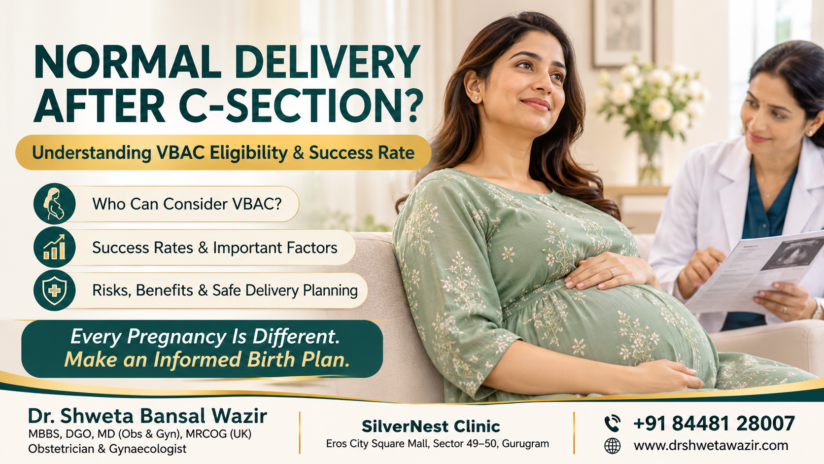
The good news is that normal delivery after C section is possible for many women. This is medically known as Vaginal Birth After Caesarean (VBAC). However, the possibility of vaginal delivery depends on several factors, including the reason for the previous C-section, the type of incision made on the uterus, the mother’s current pregnancy and her overall health.
A previous C-section does not automatically mean that every future delivery must also be surgical. With proper evaluation, medical guidance and appropriate hospital facilities, many women can safely consider VBAC.
What Is VBAC (Vaginal Birth After Caesarean)?
VBAC stands for Vaginal Birth After Caesarean. It means delivering a baby through the birth canal after having previously delivered through a C-section.
When a pregnant woman plans to attempt vaginal delivery following an earlier C-section, the process is called a Trial of Labour After Caesarean (TOLAC). If labour progresses successfully and the baby is delivered vaginally, it is called VBAC.
There are two main delivery options after a previous C-section:
- Planned VBAC: Attempting vaginal delivery under appropriate medical supervision.
- Elective Repeat C-Section: Planning another surgical delivery before labour begins.
Both options have benefits and potential risks. The right choice depends on individual medical circumstances rather than personal preference alone.
VBAC Eligibility: Who Can Have a Normal Delivery After C Section?
Not every woman with a previous C-section has the same chances of vaginal delivery. An obstetrician evaluates the previous surgical records, current pregnancy and maternal health before recommending VBAC.
Generally, women may be suitable candidates when:
- Previous C-section Was a Lower Segment Transverse Incision
The type of incision on the uterus is one of the most important factors. A low transverse incision is a horizontal cut made in the lower part of the uterus. It is associated with a lower risk of uterine rupture during labour compared with certain other incision types.
Importantly, the scar visible on the abdominal skin does not always indicate the type of incision made on the uterus. Previous operation records are therefore important.
- Only One Previous C-Section
Women who have had one previous C-section, particularly with a low transverse uterine incision, are generally considered potential candidates for VBAC.
Some women with two previous C-sections may also be considered after specialist assessment, but individual risks require careful discussion.
- No Previous Uterine Rupture
Women who have experienced uterine rupture during an earlier pregnancy or labour are generally not advised to attempt VBAC because of the increased risk of recurrence.
- No Pregnancy Complications Requiring Caesarean Delivery
The current pregnancy should not have complications that make vaginal delivery unsafe. Certain placental conditions, abnormal fetal presentations and other obstetric complications may require a planned C-section.
VBAC Success Rate: What Are the Chances of Normal Delivery?
One of the most common questions women ask is whether VBAC actually works.
According to the Royal College of Obstetricians and Gynaecologists (RCOG), approximately 75 out of 100 women with one previous C-section, a straightforward pregnancy and spontaneous labour achieve vaginal delivery.
The VBAC success rate can increase to approximately 85–90% among women who have previously experienced a vaginal birth, including a successful VBAC.
However, these figures are general estimates and cannot predict an individual woman’s outcome.
Several factors influence the chances of successful VBAC:
- Previous vaginal delivery: Women who have delivered vaginally before generally have higher chances of successful VBAC.
- Reason for previous C-section: If the earlier surgery was performed because of breech presentation or another condition that is unlikely to recur, the chances may be more favourable.
- Natural onset of labour: Spontaneous labour is generally associated with a higher success rate than induced labour.
- Maternal health: Overall health, body weight and pregnancy-related conditions can influence labour progress.
- Baby’s position and size: The baby’s presentation and estimated weight are considered during delivery planning.
A failed VBAC attempt may require an emergency C-section. Therefore, women should understand both possibilities before making their decision.
When Is VBAC Not Recommended?
Although vaginal birth after C-section is possible for many women, certain medical conditions make it unsuitable.
VBAC is generally not recommended in situations such as:
- A previous classical C-section involving a vertical incision in the upper part of the uterus.
- Previous uterine rupture.
- Three or more previous C-sections, where planned vaginal birth is generally not advised under standard guidance.
- Placenta praevia covering the cervix or another condition requiring surgical delivery.
- Other serious maternal or fetal complications that make vaginal delivery unsafe.
Women with previous complicated uterine surgery may also require an individual assessment.
What Are the Risks of Vaginal Birth After C-Section?
VBAC has several potential benefits, but it is important to understand its risks.
The most significant concern is uterine rupture, a rare but serious complication in which the previous uterine scar opens during labour. This can cause severe bleeding and put both mother and baby at risk.
Another possibility is an unsuccessful trial of labour, requiring an emergency C-section. An emergency procedure after labour has started can carry additional complications compared with a planned repeat C-section.
For this reason, VBAC should be attempted in a properly equipped hospital with continuous fetal monitoring, experienced obstetric staff, immediate access to emergency C-section and blood transfusion facilities.
Labour induction also requires special consideration because certain induction methods can increase the risk of uterine rupture.
How Can You Prepare for VBAC During Your Second Pregnancy?
Preparation should begin early rather than waiting until the final weeks of pregnancy.
Consider these important steps:
Review your previous C-section records: Discuss why the earlier surgery was required and confirm the type of uterine incision.
Attend regular antenatal appointments: Your obstetrician can monitor your health, the baby’s growth, placental position and other pregnancy-related factors.
Maintain a healthy lifestyle: Follow a balanced diet, stay physically active as advised by your doctor and manage existing medical conditions.
Discuss your delivery preferences: Understand the advantages, limitations and risks of both VBAC and repeat C-section.
Choose an appropriately equipped hospital: Emergency surgical support must be available if labour does not progress safely.
Is Normal Delivery After C-Section the Right Choice for You?
There is no single delivery method that is best for every woman. A successful VBAC can offer a shorter recovery, avoid another abdominal operation and reduce some risks associated with multiple C-sections in future pregnancies.
On the other hand, a planned repeat C-section may be the safer option when specific medical conditions increase the risks of vaginal delivery.
The most important consideration is the safety of both mother and baby. Women should never feel pressured to choose vaginal delivery simply because they want to avoid another C-section.
At SilverNest Clinic, Dr. Shweta Bansal Wazir, MBBS, DGO, MD (Obs & Gyn), MRCOG (UK), provides evidence-based guidance for pregnancy planning, high-risk pregnancies and childbirth decisions. Every woman’s pregnancy history and medical needs deserve individual attention.
If you are planning your second pregnancy or wondering whether normal delivery after C section is possible, an early consultation can help you understand your VBAC eligibility and make an informed delivery plan.
For consultations:
Phone: +91 84481 28007
SilverNest Clinic, Eros City Square Mall, Sector 49–50, Gurugram.



Leave A Comment