Diwali is a festival of lights, family gatherings and celebration. For an expectant mother, however, the festive season can bring an additional concern: exposure to firecracker smoke and worsening air pollution. In many Indian cities, including Delhi, Gurugram, Ludhiana and other parts of North India, air quality can deteriorate around Diwali because of fireworks, vehicle emissions, weather conditions and other sources of pollution.
A pregnant woman may experience coughing, throat irritation, watery eyes or breathing discomfort after exposure to smoke. Naturally, she may also worry about whether the pollution can affect her developing baby.
Understanding the risks does not mean avoiding every celebration. It means taking sensible precautions, reducing unnecessary exposure and recognising when medical advice is needed. With a few thoughtful changes, families can make Diwali safer and more comfortable for expectant mothers.
Why Is Firecracker Smoke a Concern During Pregnancy?
Firecrackers release a mixture of pollutants into the atmosphere. These can include fine particulate matter such as PM2.5 and PM10, sulphur dioxide, nitrogen dioxide and various chemical compounds and metals.
The smallest particles are particularly concerning because they can travel deep into the respiratory system. Some components of air pollution can also enter the bloodstream after being inhaled.
Pregnancy involves important changes in a woman’s respiratory and cardiovascular systems. Her body is supporting both her own needs and the development of the baby. Exposure to polluted air may increase respiratory irritation and place additional stress on the body.
Research has associated exposure to air pollution during pregnancy, particularly fine particulate matter, with an increased risk of certain adverse pregnancy outcomes, including preterm birth and low birth weight. However, these findings describe population-level associations. They do not mean that brief exposure to Diwali smoke will automatically harm an individual pregnancy.
The sensible approach is to reduce exposure wherever possible, particularly during periods of poor air quality.
Can Diwali Air Pollution Affect the Baby?
This is one of the most common concerns among pregnant women during the festive season.
The placenta plays an essential role in supplying oxygen and nutrients to the developing baby. Maternal exposure to air pollution has been studied for its possible effects on placental function, fetal growth and pregnancy outcomes.
Fine particulate pollution and other airborne pollutants may contribute to inflammation and oxidative stress in the body. Research has linked repeated or prolonged exposure to polluted air with an increased likelihood of complications such as low birth weight and premature delivery.
However, the risk depends on several factors, including the level and duration of exposure, the woman’s general health, the stage of pregnancy and existing medical conditions.
A woman who has briefly stepped outside during a smoky evening should not immediately assume that her baby has been harmed. One exposure does not establish that a pregnancy complication has occurred. Reducing further exposure and seeking medical advice if symptoms develop are more useful steps than unnecessary panic.
Common Symptoms of Firecracker Smoke Exposure in Pregnant Women
Firecracker smoke can irritate the eyes, nose, throat and respiratory tract. Some women may experience symptoms even after relatively short periods outdoors, especially when pollution levels are high.
Common symptoms include:
- Burning or watering eyes.
- Sneezing, nasal irritation or a blocked nose.
- Dry or persistent coughing.
- Sore throat or throat irritation.
- Headache or discomfort.
- Wheezing or chest tightness.
- Shortness of breath, particularly in women with existing respiratory conditions.
Pregnant women with asthma, allergies or other lung conditions may be more sensitive to polluted air. Smoke can trigger symptoms and may make an existing condition harder to control.
It is important not to dismiss significant breathing difficulty as a normal pregnancy symptom.
Diwali Safety Precautions During Pregnancy: How to Avoid Firecracker Smoke
The most effective precaution is to minimise direct exposure to firecracker smoke. Pregnant women do not need to participate in outdoor firecracker activities to enjoy the festival.
Stay indoors during peak firecracker activity
Try to remain inside during the hours when fireworks are being used heavily in your neighbourhood. Avoid standing on balconies, terraces or near roads where smoke is accumulating.
If you need to step outside, choose a time when local air quality and smoke conditions are better.
Keep windows and doors closed when smoke is present
When outdoor air is heavily polluted, keeping windows and external doors closed can help reduce the amount of smoke entering the home. However, indoor air should still be managed carefully, especially if cooking fumes or other indoor pollutants are present.
Use an air purifier if available
A properly sized air purifier with a HEPA filter can help reduce airborne particles inside a room. Keep the device maintained according to the manufacturer’s instructions and use it in the room where the pregnant woman spends most of her time.
Avoid unnecessary outdoor activities
Postpone outdoor walks, jogging, shopping trips and strenuous exercise when air quality is poor. Check the Air Quality Index (AQI) before planning outdoor activities.
Consider a well-fitting N95 mask when outdoor exposure is unavoidable
If travel outside is necessary during heavy pollution, a properly fitted N95 respirator can reduce inhalation of fine particles. It is an additional precaution, not a replacement for avoiding unnecessary exposure. A mask should not delay medical care if breathing symptoms develop.
Indoor Air Quality During Diwali: Hidden Sources of Smoke
Closing the windows is not enough if the indoor environment also contains smoke and fumes.
During Diwali, households may use incense sticks, dhoop, candles, oil lamps and other products that produce smoke or airborne particles. Cooking large festive meals can also increase indoor pollution, particularly in poorly ventilated kitchens.
Pregnant women can take a few simple steps:
- Avoid sitting close to incense sticks, dhoop or smoke-producing decorations.
- Keep the cooking area properly ventilated.
- Avoid burning waste or other materials near the home.
- Do not use firecrackers indoors, in corridors or enclosed spaces.
- Keep the sleeping area free from smoke and strong fumes.
- Ask family members to avoid smoking inside the house.
Traditional celebrations can be adapted without making the indoor environment uncomfortable. The aim is to enjoy the festival while limiting avoidable sources of smoke.
Can Pregnant Women Celebrate Diwali Outdoors?
There is no single rule that applies to every pregnant woman. The decision should depend on local air quality, the amount of smoke, the woman’s health and her pregnancy-related medical advice.
If air quality is poor or firecracker smoke is visible, staying indoors is the safer choice. Women with asthma, breathing problems, high-risk pregnancies or other medical concerns should be particularly cautious.
If attending a family gathering, choose a well-ventilated indoor setting away from fireworks. Avoid crowded areas where smoke is trapped, and arrange a comfortable way to leave if symptoms develop.
Pregnancy is not a reason to feel isolated during festivals. Family members can help by choosing celebrations that do not expose the expectant mother to unnecessary pollution.
When Should a Pregnant Woman Contact a Doctor?
Mild throat irritation or temporary eye discomfort may improve after moving away from smoke. However, certain symptoms require prompt medical attention.
Contact your doctor if you develop persistent coughing, new wheezing, worsening asthma symptoms or breathing discomfort after exposure to pollution.
Seek urgent medical assessment if you experience:
- Sudden or severe shortness of breath.
- Chest pain or tightness.
- Fainting, severe dizziness or confusion.
- Severe wheezing or difficulty speaking because of breathlessness.
- Symptoms that are rapidly worsening.
Pregnant women should also follow their usual maternity advice regarding vaginal bleeding, fluid leakage, painful contractions or reduced fetal movements when movements are normally expected. These symptoms should not be attributed to air pollution or ignored because of the festive season.
If you have asthma, continue your prescribed treatment and follow your asthma action plan. Do not stop or change medication without consulting your doctor.
Does One Exposure to Firecracker Smoke Mean the Baby Is in Danger?
Not necessarily. This is an important point for expectant mothers who may have accidentally inhaled smoke while travelling, visiting relatives or stepping outside.
The health concerns associated with air pollution are largely related to the level, duration and frequency of exposure. A brief episode does not automatically mean that the baby has been affected or that a pregnancy complication will develop.
If you feel well, move away from the polluted area, return to a cleaner indoor environment and continue your regular antenatal care. If you experience concerning symptoms or have a high-risk pregnancy, discuss the exposure with your obstetrician.
There is no home remedy, detox drink or special food that can reverse inhaled pollution. The practical priorities are reducing further exposure, maintaining normal hydration and nutrition, and seeking medical care when needed.
A Safer Diwali for Every Expectant Mother
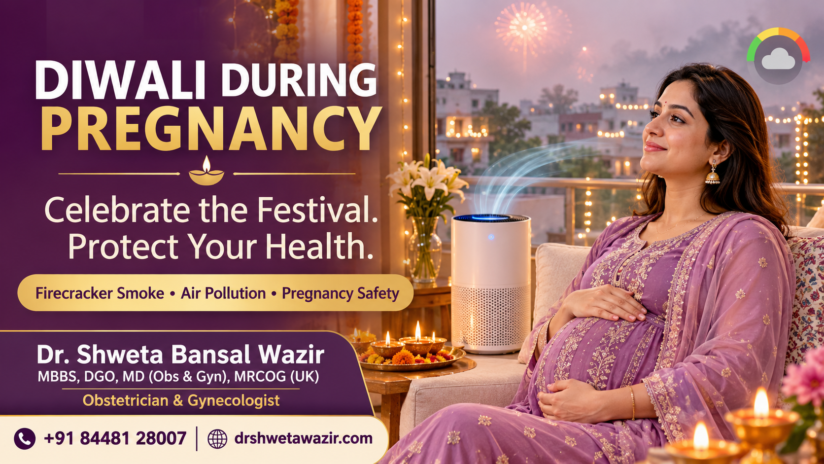
Diwali should be a time of happiness, not unnecessary anxiety for pregnant women. A few precautions can make a meaningful difference: avoid firecracker smoke, check the AQI, maintain cleaner indoor air, avoid strenuous outdoor activity during severe pollution and seek medical advice if respiratory symptoms appear.
Family members also have an important role. Choosing quieter celebrations, avoiding fireworks near the home and respecting the needs of an expectant mother can help create a safer environment for everyone.
The most important message is simple: celebrate the festival, but do not compromise on clean air and maternal health.
About Dr. Shweta Bansal Wazir
Dr. Shweta Bansal Wazir is an MBBS, DGO, MD (Obs & Gyn), MRCOG (UK) Obstetrician and Gynecologist who follows an evidence-based approach to pregnancy and women’s healthcare. She provides consultation for pregnancy care, high-risk pregnancy, fertility concerns, menstrual health and other obstetric and gynaecological conditions.
Phone: +91 84481 28007



Leave A Comment