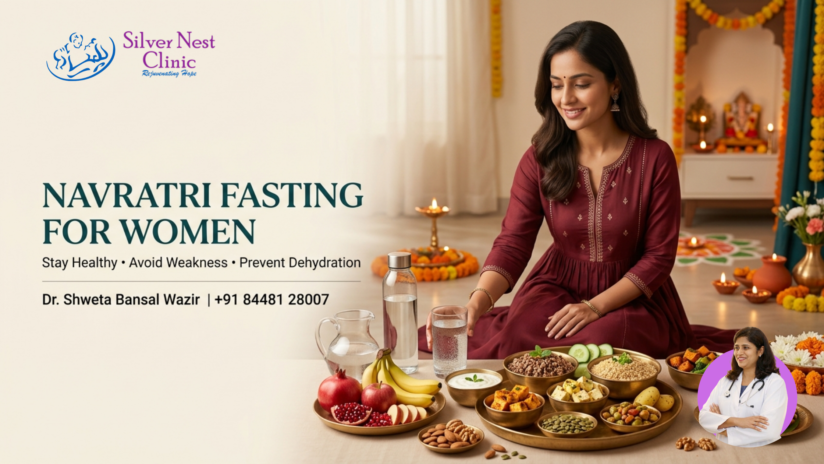
Navratri fasting is an important tradition for many Indian women. Some women avoid grains and pulses, while others eat only once a day or follow a fruit-and-milk-based fast. Although fasting can be a meaningful part of the festival, changing your usual eating and drinking pattern for several days can sometimes lead to weakness, headaches, acidity, constipation or dehydration.
This does not mean that every woman needs to avoid fasting. The important question is how to fast without compromising your nutrition, hydration and health.
A healthy Navratri fast should provide enough fluids, energy and essential nutrients while respecting your individual religious practices and medical needs.
Navratri Fasting for Women: Why Can You Feel Weak?
Weakness during fasting can have several possible causes. Going for long periods without food can reduce your usual energy intake. If meals contain mostly fruit, potatoes or fried fasting foods, you may also miss the balance of protein, fibre and other nutrients found in a varied diet.
Changes in your normal caffeine intake can also contribute to headaches in people who regularly consume tea or coffee. In addition, insufficient fluid intake, sweating and hot weather can increase the risk of dehydration.
Dehydration may cause thirst, tiredness, dizziness, headache, dry mouth and darker urine. Passing urine less frequently than usual can also be a warning sign.
How to Stay Healthy During Navratri Fasting
The simplest way to make fasting healthier is to think beyond the foods you are avoiding. Consider what your body still needs during the fasting period.
Choose Nutrient-Rich Fasting Foods
Depending on your fasting tradition, include a variety of foods such as:
- Fresh fruits
- Vegetables permitted during fasting
- Milk and curd
- Paneer
- Nuts and seeds
- Kuttu
- Rajgira
- Sweet potatoes
- Potatoes in sensible portions
Try to combine different food groups rather than eating the same food repeatedly.
For example, fruit with curd and a small serving of nuts can provide greater nutritional variety than eating fruit alone. Similarly, a kuttu preparation with vegetables and curd can make a more balanced meal than relying entirely on fried fasting snacks.
The ICMR-National Institute of Nutrition emphasizes variety in the daily diet and recommends including vegetables, fruits, nuts and other nutrient-rich foods as part of a balanced Indian diet.
Healthy Navratri Fasting: Do Not Depend Only on Fried Foods
Many popular Navratri foods are deep-fried or prepared with generous amounts of oil. Kuttu puri, sabudana vada, pakoras, chips and fried potatoes may be traditional favourites, but eating them frequently can make your diet high in fat and energy without providing enough variety.
This does not mean you can never enjoy them.
Instead, consider making them an occasional part of the meal rather than the foundation of your fasting diet. Home-cooked preparations using less oil can be a practical alternative.
NHS fasting guidance similarly recommends limiting highly fatty and deep-fried foods and choosing healthier cooking methods where possible.
What to Eat During Navratri Fasting to Avoid Weakness
If you are allowed to eat several times during your fasting routine, avoid leaving your body without nourishment for unnecessarily long periods.
A simple day might include:
Morning: Milk or curd with fruit and a small portion of nuts.
Mid-morning: Fresh fruit or another suitable snack.
Lunch: Kuttu or rajgira with vegetables and curd.
Evening: Milk, fruit, nuts or another permitted homemade snack.
Dinner: A balanced fasting meal containing an appropriate carbohydrate, vegetables and a protein-rich food such as paneer or curd.
This is only a general example. Your dietary requirements may differ depending on your age, activity level, health conditions and whether you are pregnant or breastfeeding.
Hydration During Navratri Fasting: How to Prevent Dehydration
Hydration is one of the most important parts of a healthy fast.
If your fasting practice permits water, drink regularly during the hours when fluids are allowed rather than trying to consume a very large quantity at one time.
Water should be your main source of hydration. Milk and other suitable fluids can also contribute to your daily fluid intake.
Be particularly careful during hot weather, physical activity or if you are sweating more than usual.
A useful everyday indicator is urine colour. Dark yellow urine and passing urine less often than normal can indicate that you may not be drinking enough.
If you feel nauseated or have been vomiting, taking small, frequent sips may be easier than drinking a large amount at once.
Can Tea and Coffee Cause Problems During Fasting?
Many Indian women regularly drink tea or coffee and may suddenly reduce their caffeine intake during Navratri. For some people, this change can contribute to headaches.
If tea or coffee is part of your usual routine, avoid excessive consumption and do not use caffeinated drinks as your main source of hydration.
Also remember that fasting should not become an excuse to consume large quantities of sugary tea, coffee or packaged beverages.
Navratri Fasting and Women With Medical Conditions
Fasting is not suitable in exactly the same way for everyone.
Women with diabetes, kidney disease, recurrent low blood sugar, significant anaemia, eating disorders, frequent migraines or other medical conditions should discuss fasting with their doctor before changing their normal eating pattern.
The same applies to women who are pregnant or breastfeeding, particularly if they have difficulty maintaining adequate food or fluid intake.
If you take regular medicines, do not change their timing or stop them simply because you are fasting. Some medicines need to be taken with food or at specific times.
When Should You Stop a Navratri Fast?
Fasting should not continue at the expense of your health.
Break your fast and seek medical advice if you develop persistent dizziness, fainting, severe weakness, confusion, repeated vomiting, inability to keep fluids down, very dark urine or significantly reduced urination.
Severe dehydration can become a medical emergency.
Do not assume that severe weakness is simply a normal part of fasting. It can sometimes indicate dehydration, inadequate nutrition, low blood sugar or another underlying problem.
Navratri Fasting for Women: A Balanced Approach
Fasting does not have to mean surviving on fruit, potatoes and fried snacks for nine days.
A healthier approach is to make your permitted foods as nutritious as possible. Include suitable protein sources, fruits, vegetables, nuts, seeds and energy-giving foods. Drink adequate fluids whenever your fasting practice permits them, and avoid making highly processed, sugary or deep-fried foods the main part of your diet.
ICMR-NIN dietary guidance emphasizes dietary variety and adequate nutrition rather than unnecessary food restrictions.
Most importantly, listen to your body. Persistent dizziness, dehydration, severe weakness or other unusual symptoms deserve attention rather than being ignored for the sake of completing a fast.
Final Thoughts
Navratri fasting for women can be approached with greater awareness and balance. Your religious practice and your health do not necessarily have to be viewed as competing priorities.
Plan your meals, stay hydrated when your fasting rules permit fluids, choose nutrient-rich foods, limit excessive fried foods and pay attention to warning signs.
If you are pregnant, breastfeeding, taking regular medication or living with a medical condition, speak with your doctor before beginning a restrictive fast.
A healthy Navratri is not about how little you can eat. It is about observing the festival in a way that also respects your body’s nutritional and health needs.
For personalised women’s health, pregnancy and gynaecological guidance, consult Dr. Shweta Bansal Wazir.
Dr. Shweta Bansal Wazir
MBBS, DGO, MD (Obs & Gyn), MRCOG (UK)
Obstetrician & Gynaecologist
Phone: +91 84481 28007
Website: www.drshwetawazir.com



Leave A Comment