Navratri is a special time for many Indian women, and fasting is often observed as part of religious tradition. But pregnancy brings significant changes to the body’s nutritional and hydration needs. This can make a woman wonder: What can I eat during Navratri fasting while pregnant? Which foods should I avoid? And is fasting safe for my baby?
There is no single answer for every pregnant woman. The safety of fasting depends on the woman’s overall health, trimester, nutritional status, pregnancy complications and the type of fast she plans to follow.
If you are pregnant and planning to observe a Navratri fast, speak with your obstetrician beforehand rather than making the decision based only on general fasting advice.
Navratri Fasting During Pregnancy: Is It Safe?
Research specifically examining fasting during pregnancy is limited, and much of the available evidence comes from studies of Ramadan fasting, which is different from traditional Navratri fasting. Recent reviews have not found strong evidence that Ramadan fasting consistently increases the risk of preterm birth or low birth weight, but the quality and consistency of the evidence are not sufficient to say that fasting is universally safe for every pregnant woman.
The type of fast matters. Avoiding grains or certain foods while continuing to eat nutritious meals and drink adequate fluids is very different from going for long periods without food or water.
Pregnancy is a period when the mother needs a varied diet to support her own health and the growth and development of the baby. Therefore, restrictive fasting should never result in prolonged nutritional deprivation.
What to Eat During Navratri Fasting in Pregnancy
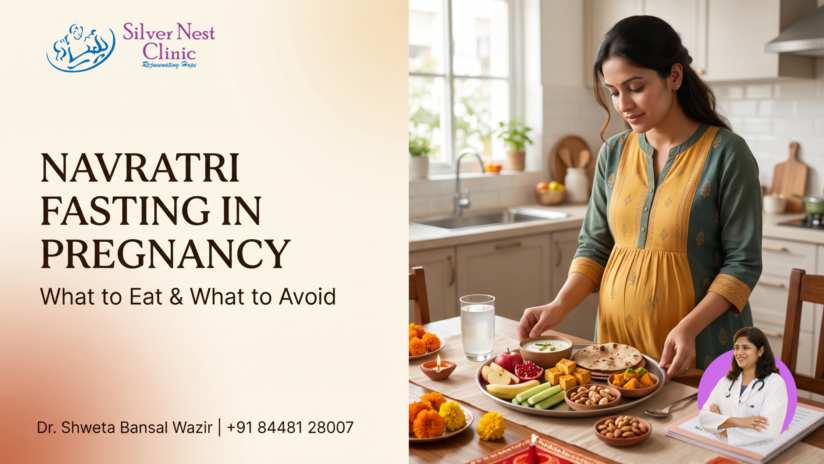
If your doctor has advised that a modified Navratri fast is appropriate for you, focus on nutrient-dense foods rather than simply eating foods permitted during fasting.
1. Include Protein-Rich Foods
Protein is important during pregnancy for maternal tissue growth and fetal development.
Depending on your fasting tradition, suitable choices may include:
- Milk and curd
- Paneer
- Nuts and seeds
- Unsweetened yoghurt
- Other protein-rich foods permitted by your personal fasting practice
Instead of relying mainly on potatoes or fruit, try to include a protein source with your meals and snacks.
2. Choose Fruits and Vegetables
Fresh fruits can provide fibre, vitamins, minerals and natural carbohydrates. Choose a variety rather than eating large quantities of only one fruit.
Vegetables permitted during your fast can also help add fibre and micronutrients to meals.
For example, a meal containing a vegetable preparation, curd and a suitable carbohydrate source is generally more balanced than eating only fried fasting snacks.
3. Choose Energy-Giving Carbohydrates Wisely
Foods such as kuttu, rajgira, potatoes and sweet potatoes may be included depending on your fasting practices and your doctor’s advice.
The important point is preparation.
Kuttu puri or pakoras that are deep-fried can add substantial amounts of fat without providing the nutritional balance of a complete meal. A home-cooked preparation using suitable ingredients may be a better choice.
4. Include Healthy Fats in Moderate Amounts
Nuts, seeds and other appropriate sources of unsaturated fats can contribute energy and important nutrients.
However, pregnancy does not mean that high-calorie fasting foods should be eaten without limits. Portion size still matters.
What to Avoid During Navratri Fasting While Pregnant
Some foods commonly associated with Navratri fasting may be less suitable when consumed frequently or in large quantities.
Avoid Excessive Fried Fasting Foods
Sabudana vada, kuttu puri, pakoras, chips and similar fried foods may be traditional favourites, but eating them repeatedly can make the diet high in fat and relatively low in nutritional variety.
You do not necessarily need to completely eliminate a food simply because it is fried, but it should not become the main part of your pregnancy diet.
Avoid Excessively Sugary Foods and Drinks
Fasting can sometimes lead to increased consumption of sweets, packaged drinks and sweetened beverages.
These can provide calories without supplying the broad range of nutrients required during pregnancy. A balanced diet should contain a variety of foods rather than relying heavily on added sugars.
Do Not Rely Only on Fruit
Fruit is healthy, but a pregnancy diet based almost entirely on fruit during fasting may not provide enough protein and overall nutritional variety.
Pair fruit with an appropriate protein or dairy food when possible.
Avoid Dehydration
If your fasting practice permits fluids, continue drinking water regularly throughout the permitted period.
Dehydration may cause weakness, dizziness, headache and reduced urination. Pregnant women who are already experiencing significant vomiting or difficulty keeping fluids down should be particularly cautious.
Navratri Fasting Diet for Pregnant Women: A Simple Approach
A practical approach is to divide permitted eating hours into smaller, balanced meals rather than consuming one very large meal.
For example, depending on your doctor’s advice and fasting rules, your day could include:
Morning: Milk or curd with fruit and a small portion of nuts.
Mid-morning: Fresh fruit or another suitable snack.
Lunch: Kuttu or rajgira preparation with vegetables and curd.
Evening: Fruit, milk or a suitable homemade snack.
Dinner: A balanced meal containing an allowed carbohydrate, vegetables and a protein-rich food such as paneer or curd.
This is only an example. Your individual meal plan should be adjusted according to your pregnancy, nutritional requirements, medical history and fasting rules.
Who Should Not Fast Without Medical Advice?
Some pregnant women require closer nutritional and medical monitoring. This includes women with significant vomiting, dehydration, anaemia, diabetes, inadequate weight gain, certain high-risk pregnancy conditions or other medical problems.
Women taking regular medicines should also speak to their doctor before changing meal timing or stopping anything because of fasting.
Do not discontinue prescribed iron, folic acid, calcium or other pregnancy supplements without medical advice.
When Should You Stop Fasting?
A pregnant woman should not try to “push through” significant symptoms simply to complete a fast.
Stop fasting and seek medical advice if you experience persistent dizziness, fainting, severe weakness, repeated vomiting, inability to keep fluids down, markedly reduced urination, severe abdominal pain or any other concerning pregnancy symptom.
Your health and your baby’s wellbeing should take priority over completing a fast.
Final Thoughts on Navratri Fasting During Pregnancy
Navratri fasting during pregnancy requires balance, not restriction. If your obstetrician feels that a modified fast is appropriate, focus on nutritious foods, adequate fluids and regular nourishment rather than relying mainly on fried or sugary fasting foods.
There is currently not enough high-quality evidence to give one universal recommendation for fasting during pregnancy.
The best approach is individualized. Before Navratri begins, discuss your planned fasting pattern with your obstetrician, especially if you have any pregnancy complication or nutritional concern.
Religious traditions can be respected while also making sensible adjustments to protect maternal nutrition and support a healthy pregnancy.
For personalised pregnancy guidance and obstetric care, consult Dr. Shweta Bansal Wazir.
Dr. Shweta Bansal Wazir
MBBS, DGO, MD (Obs & Gyn), MRCOG (UK)
Obstetrician & Gynaecologist
Phone: +91 84481 28007



Leave A Comment