For many Indian women, having a regular menstrual cycle feels like reassurance that everything is working normally. So when pregnancy does not happen despite months of trying, a natural question arises: “If my periods are regular, why am I not getting pregnant?”
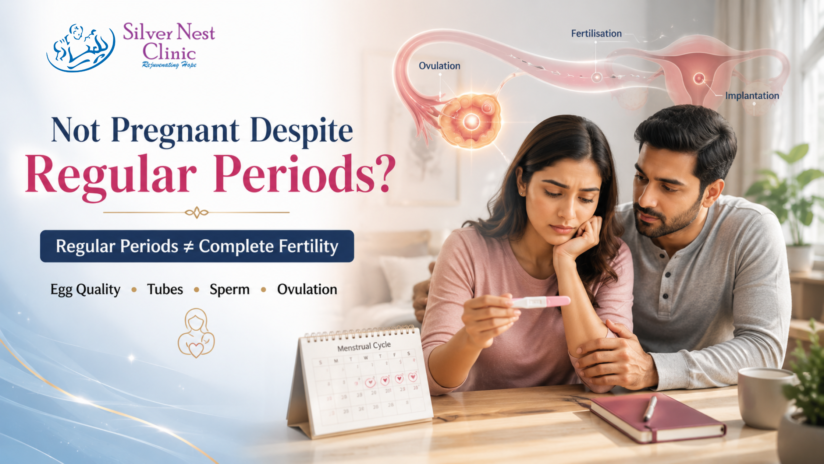
Regular periods are certainly a positive sign. They often indicate that ovulation is occurring, particularly when cycles are predictable. However, regular menstruation does not tell the complete story of fertility. Successful conception requires several events to happen in sequence: a healthy egg must be released, sperm must reach and fertilise it, the fallopian tubes must allow the egg and sperm to meet, the resulting embryo must travel towards the uterus, and implantation must occur successfully.
A problem at any stage can make conception more difficult, even when periods appear completely normal. Fertility can also be affected by the health of the male partner, age, previous pelvic infections or surgery, endometriosis, lifestyle factors, and sometimes causes that cannot be identified despite appropriate testing. The World Health Organization estimates that infertility affects approximately one in six people of reproductive age worldwide, and it can result from female factors, male factors, a combination of both, or unexplained causes.
The important message is that regular periods do not mean you should ignore difficulty conceiving but neither do they mean something is necessarily wrong.
Does Having Regular Periods Mean I Am Fertile?
Regular menstrual cycles generally suggest that ovulation is taking place. Current NICE guidance notes that women with regular monthly cycles are likely to be ovulating, while the American Society for Reproductive Medicine states that women with regular cycles in the typical 21–35-day range generally do not need additional testing simply to confirm ovulation, unless there are other clinical concerns.
However, ovulation is only one part of fertility.
You may have regular periods and still experience difficulty conceiving because of reduced ovarian reserve, age-related changes in egg quality, blocked fallopian tubes, endometriosis, uterine conditions, sperm-related factors, or problems with fertilisation or implantation.
This is why fertility should be viewed as a complete reproductive process rather than simply a measure of menstrual regularity.
Common Reasons for Not Getting Pregnant Despite Regular Periods
Age and Declining Egg Quality Can Affect Pregnancy
One of the most important factors influencing female fertility is age. A woman may continue to have regular periods while the number and quality of her eggs gradually decline.
This becomes particularly important after the mid-30s. Age can affect both the likelihood of conception and the risk of miscarriage. Therefore, a woman in her late thirties with regular periods may still experience more difficulty conceiving than a woman in her twenties or early thirties.
This does not mean that pregnancy after 35 is impossible. Many Indian women conceive naturally or with appropriate fertility treatment after this age. However, if conception is taking longer than expected, timely fertility assessment becomes increasingly important.
PCOS Can Affect Fertility Even When Periods Look Better
Polycystic Ovary Syndrome, or PCOS, is a common reproductive and hormonal condition among women in India. It can interfere with normal ovulation, although its presentation varies considerably from woman to woman.
Some women with PCOS have clearly irregular periods, while others may experience relatively predictable cycles. Therefore, menstrual regularity alone cannot completely rule out an ovulatory problem.
If you have a history of PCOS, unexplained difficulty conceiving, excessive facial hair, acne, significant weight changes, or previous concerns about ovulation, discuss your reproductive health with your gynaecologist rather than relying only on cycle tracking.
Blocked Fallopian Tubes May Cause Infertility Without Affecting Periods
The fallopian tubes play an essential role in natural conception. They provide the pathway where sperm and egg can meet and where early fertilisation takes place.
A blocked or damaged fallopian tube may prevent sperm from reaching the egg or interfere with the movement of the fertilised egg towards the uterus. Importantly, blocked tubes generally do not stop menstruation, which means a woman can have perfectly regular periods and still have tubal-factor infertility.
Previous pelvic infections, certain sexually transmitted infections, endometriosis, abdominal or pelvic surgery, and some other conditions can increase the risk of tubal problems.
When clinically appropriate, tests such as hysterosalpingography (HSG) or sonographic assessment may be used to evaluate whether the fallopian tubes are open.
Endometriosis Can Affect Fertility Even With Regular Cycles
Endometriosis occurs when tissue similar to the lining of the uterus grows outside the uterus. It may cause pelvic pain, painful periods, painful intercourse, or difficulty conceiving.
Some women, however, have relatively mild symptoms or do not realise they have endometriosis until they experience fertility difficulties.
Endometriosis may affect fertility through inflammation, changes around the ovaries and fallopian tubes, adhesions, and other alterations within the pelvis. If you experience severe period pain, chronic pelvic discomfort, pain during intercourse, or unexplained difficulty conceiving, medical evaluation is worthwhile.
Male Fertility Is Just as Important
One of the most important messages for couples trying to conceive is that fertility is not only a woman’s issue.
Male factors can contribute to infertility independently or together with female factors. Sperm count, movement, shape, and other aspects of sperm health can influence the likelihood of conception. Smoking, excessive alcohol use, obesity, certain medical conditions, previous infections, some medications, and other factors may affect sperm quality.
For this reason, fertility evaluation should generally involve both partners. A semen analysis is a basic and important investigation and can sometimes identify a significant factor much earlier than extensive testing of the woman.
Timing of Intercourse Can Influence Your Chances of Conception
Even when ovulation is normal, pregnancy requires intercourse during the fertile window.
The fertile window is the approximately six-day interval ending on the day of ovulation. Having intercourse regularly during this period increases the opportunity for sperm to be present when ovulation occurs. ASRM notes that intercourse every one to two days during the fertile window is associated with the highest pregnancy rates.
Rather than putting pressure on yourself to identify one “perfect” day, regular intercourse throughout the fertile period can be a more practical approach.
Lifestyle Factors Can Also Influence Fertility
Fertility is influenced by overall health. Being significantly underweight or overweight, smoking, excessive alcohol consumption, poor sleep, and a sedentary lifestyle can adversely affect reproductive health.
For Indian women planning pregnancy, a balanced diet containing vegetables, fruits, whole grains, pulses, dairy or suitable alternatives, nuts, seeds, and adequate protein can support general health. Maintaining a healthy weight, staying physically active, managing stress, avoiding tobacco, and taking a prenatal folic acid supplement as advised by your doctor are sensible components of preconception care.
These measures cannot correct every fertility problem, but they can create a healthier foundation for conception and pregnancy.
When Should You See a Fertility Specialist?
Not conceiving after a few months does not automatically mean infertility. Conception can naturally take time, even when both partners are healthy.
For women under 35, fertility evaluation is generally recommended after 12 months of regular unprotected intercourse without pregnancy. For women 35 or older, evaluation is generally recommended after six months of trying. Women over 40 may benefit from more immediate assessment.
You should not necessarily wait for these timeframes if there is already a known or suspected fertility concern. Earlier assessment may be appropriate with irregular cycles, suspected endometriosis, known uterine or tubal disease, previous pelvic surgery, recurrent pregnancy loss, suspected male-factor infertility, or other conditions associated with reduced fertility.
What Fertility Tests May Be Recommended?
A fertility evaluation should be personalised rather than based on a standard package of tests for everyone.
Your doctor may begin with a detailed discussion about menstrual cycles, previous pregnancies, medical conditions, medications, surgeries, lifestyle, sexual history, and family history. Depending on your circumstances, evaluation may include pelvic ultrasound, ovulation assessment when indicated, hormone testing, thyroid evaluation, assessment of the uterus and fallopian tubes, and semen analysis for the male partner.
Tests such as AMH or ovarian reserve assessment can provide useful information in selected fertility evaluations, but they should not be interpreted as a simple “fertility score.” Current NICE guidance specifically advises against using AMH as a predictor of natural conception.
The purpose of testing is not simply to find a problem, it is to understand the couple’s reproductive health and determine whether treatment, lifestyle changes, reassurance, or further evaluation is appropriate.
What If All Fertility Tests Are Normal?
Sometimes, fertility investigations do not identify an obvious reason for delayed conception. This is often described as unexplained infertility.
Being told that your tests are normal can be confusing, but it does not mean that pregnancy is impossible. It means that currently available investigations have not identified a clear explanation.
Your doctor can discuss appropriate next steps based on age, duration of trying, previous pregnancy history, test results, and personal preferences. The right treatment pathway is different for every couple.
What Should You Do If You Are Not Getting Pregnant?
If your periods are regular but pregnancy has not occurred, try not to blame yourself or assume that your body is “not working properly.”
Start by reviewing the basics: age, duration of trying, timing of intercourse, medical history, lifestyle, ovulation, tubal health, and male fertility. If you have been trying for the recommended period or have a known risk factor, consult an experienced gynaecologist or fertility specialist.
Most importantly, do not rely on unverified fertility supplements, restrictive diets, or social media advice as substitutes for medical evaluation. Evidence-based fertility care is about identifying the right issue and choosing the least invasive appropriate solution.
Conclusion: Regular Periods Are Reassuring, But They Are Not the Whole Fertility Picture
Having regular periods is generally a positive sign and often indicates that ovulation is occurring. But conception depends on much more than menstruation. Egg quality, age, fallopian tube health, the uterus, sperm quality, timing of intercourse, endometriosis, PCOS, lifestyle, and several other factors can influence whether pregnancy occurs.
If you have been trying to conceive without success, there is no reason to feel embarrassed or blame yourself. Fertility difficulties are common, and both women and men can contribute to them. With timely assessment, many underlying problems can be identified and managed.
Your regular periods are one piece of the fertility puzzle not the complete picture.
Consult Dr. Shweta Bansal Wazir for Personalised Fertility Guidance
If you are having regular periods but are still unable to conceive, Dr. Shweta Bansal Wazir can help you understand your individual fertility factors through a personalised, evidence-based approach. A consultation can help determine whether you need reassurance, lifestyle guidance, fertility testing, treatment for an underlying condition, or further specialist evaluation.
For concerns related to delayed conception, PCOS, ovulation, endometriosis, recurrent pregnancy loss, preconception planning, or women’s reproductive health, timely professional advice can make the journey clearer and more manageable.
Phone: +91 84481 28007



Leave A Comment